
The Thousand-Year Secret of Po Delta Oysters that Italy (Almost) Forgot
Listen to this article
10 minutes listening • The thousand-year history of Po Delta oysters
Loading audio…
In 2023, under a few centimetres of lagoon mud in Lio Piccolo, in the Venetian lagoon, archaeologists extracted something nobody expected to find. Not gold, not mosaics, not statues. A simple brick tank from the 1st century AD. Inside, 300 perfectly preserved oyster shells.
What seemed like a minor find turned out to be a historical bombshell: Italy farmed oysters 2000 years ago, and had forgotten them.
Today everyone talks about modern oyster farming in the Po Delta as something new, an innovation of recent decades. They are two millennia off.
The Roman Ostriarium: When the Delta Served Emperors
Imagine a villa overlooking the Venetian lagoon. Walls decorated with bright frescoes, geometric mosaic floors, marbles imported from all over the Empire. We are not in Pompeii or Rome. We are here, in the waters of the Po Delta, in the 1st century AD.
The owner of this villa is not just a rich man. He is someone who knows the tastes of the imperial elite, someone who knows that raw oysters are the ultimate status symbol.
Outside the villa, a rectangular structure made of brick and wood. An ostriarium, a tank to keep oysters alive before eating them. Not an industrial farm. A high-end fridge for a product worth its weight in gold.
Dendrochronological and radiocarbon analyses leave no doubt: mid-1st century AD. The oysters? Ostrea edulis, the native European species. The same one that is now slowly making its way back into the waters of the Sacca di Scardovari.
The Treat Worth an Empire
The Romans did not joke around with oysters. The poet Martial, at the end of the 1st century, described similar villas on the shores of Altino, where oysters were a must at lavish dinners. Pliny the Elder, in his Naturalis Historia, discussed with scientific seriousness the moon's influence on the plumpness of the mollusc.
DID YOU KNOW...
The Lio Piccolo ostriarium is one of only two ever discovered in Europe. The other is in Narbonne, France. This makes the Po Delta an archaeological site of continental importance for the history of aquaculture.
They were not just enthusiasts. They were the first oyster farmers in Western history. And they did it here, in the lagoons we now call the Po Delta.
What they ate in Rome, in Ravenna, in the patrician villas, came from these waters. The Delta was not the outskirts. It was the centre of a high-end industry.
"Rivers of Oysters": The Impossible Renaissance Banquets
Let's jump forward 1400 years.
We are in Ferrara, 1529. The Este court is at its peak. Duke Alfonso I d'Este is organising a banquet for 104 guests. Managing everything is Cristoforo di Messisbugo, the court steward, a sort of ceremonial director and chef rolled into one.
Messisbugo does not improvise. He notes everything down meticulously. In 1549 he will publish Banchetti, composizioni di vivande e apparecchio generale, a book that is a wide-open window onto Italian Renaissance cooking.
And what do we find in almost all his menus?
"Rivers of oysters."
Not one, not two. Rivers.

The Banquet for the Emperor
When Charles V, Holy Roman Emperor, visits Ferrara, what do they serve him? "Ostreghe Sgussate", raw shucked oysters, alongside a variety of delicacies that would make any contemporary starred restaurant pale in comparison.
In the 1529 menu for 104 guests, oysters arrive in the eighth course, the final one, along with oranges, pears and sweets. Not as a starter. As a grand finale.
There is something remarkably modern about this way of serving oysters. Raw, at the end of the meal, next to the fruit. No cooking, no heavy medieval spices. Just the pure taste of the sea.
It is as if Messisbugo had anticipated our seafood platters by 500 years.
Where Did They Come From?
The Este family controlled the Po Delta. The famous Valli di Comacchio, rich in eels and molluscs, were under their rule. They did not buy oysters. They fished them in their own territories.
The Renaissance is also the rediscovery of classical antiquity. And what better way to echo Roman imperial banquets than serving mountains of Po Delta oysters?
The Este court was not inventing anything. It was bringing a lost tradition back to life.
1604: The Year the Delta Forgot Oysters
And here is the plot twist. The catastrophe.
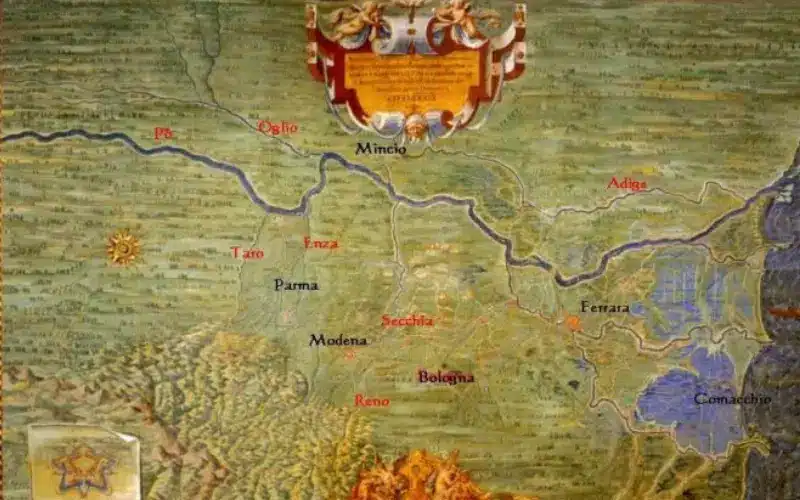
We are at the beginning of the seventeenth century. Venice has an existential problem: the Po is silting up its lagoon. The sediments threaten the canals, the port, the very survival of the Serenissima.
The solution? Cut the river and divert it elsewhere.
Between 1600 and 1604, Venice carries out a colossal engineering work: the Taglio di Porto Viro. It diverts the main branch of the Po to the south, forcing it to flow into the Sacca di Goro.
An Ecosystem Wiped Out
The effect is immediate and devastating. The new modern delta begins to form, pushing the coastline forward by kilometres in a few decades. The water salinity changes radically. The delicate lagoon habitats, the ones that had supported oysters for millennia, are turned upside down.
Ostrea edulis, the native flat oyster, needs very specific conditions to thrive. The Taglio di Porto Viro destroys them all.
Po Delta oysters disappear.
Not gradually. Not from overfishing. From deliberate environmental destruction.
Venice saves itself, but wipes out two thousand years of oyster farming tradition.
The Great Silence: Two Centuries Without Oysters
After 1604, oysters disappear from the Delta chronicles.
In the eighteenth century, while the Grand Tour brings travellers from all over Europe to Italy, no one mentions Po oysters. Scientists like Lazzaro Spallanzani study the Adriatic, but focus on microscopic phosphorescence, not molluscs.
In the nineteenth century, while the Polesine develops a "flourishing" fishing industry (according to the chronicles of the time), oysters never appear in the lists of commercial species. They talk about Comacchio eels, mullet, sole.
Oysters are a forgotten memory.
WHY THIS SILENCE?
The native populations of Ostrea edulis had gone extinct or dropped to irrelevant levels. The phenomenon is not local: all over Europe, this species is decimated between the nineteenth and twentieth centuries by overfishing and disease. But in the Delta, the fatal blow had arrived two centuries earlier, with the Taglio di Porto Viro.
The Return: A Reinvented Tradition
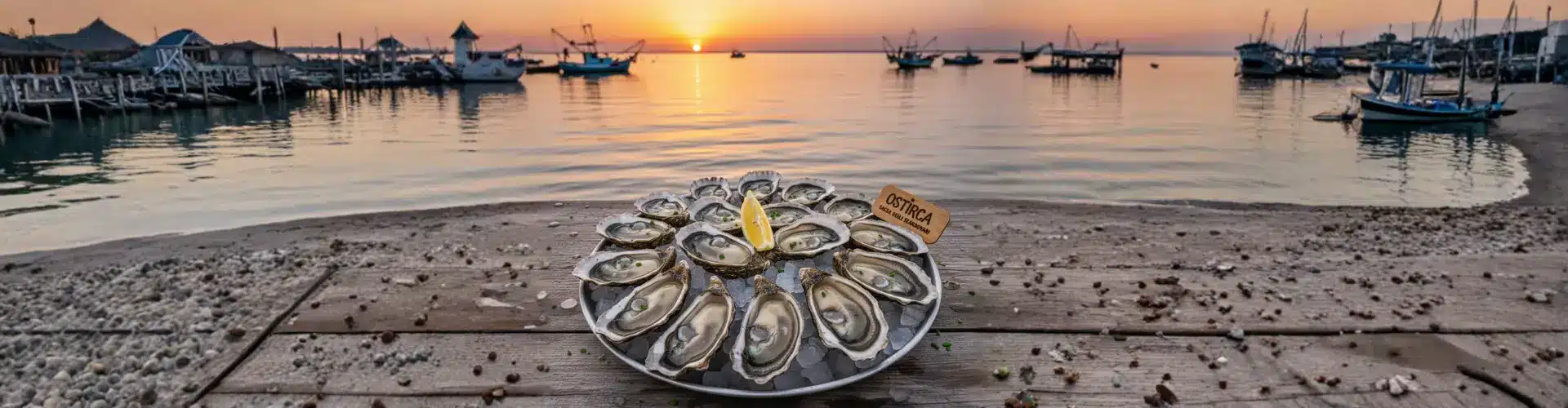
Today, in the waters of the Sacca di Scardovari and Goro, oysters are back.
But this is not a simple continuation of history. It is a rebirth.
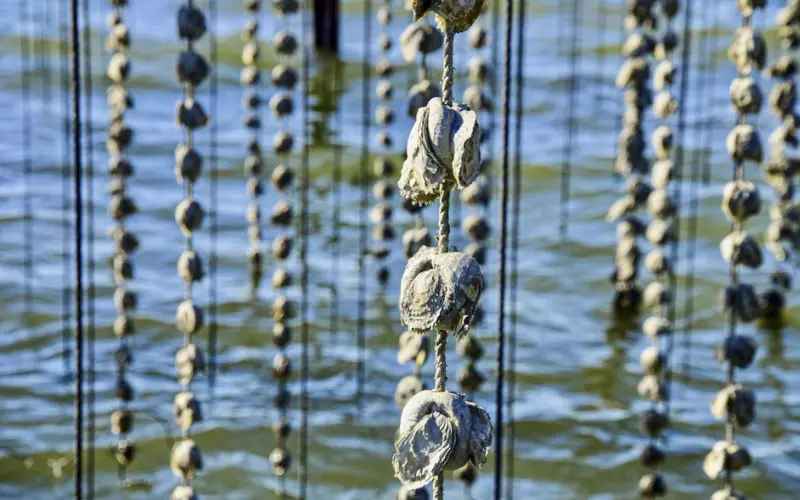
Modern oyster farming in the Delta uses technologies the Romans would never have imagined. "Solar tide" systems patented in France, using clean energy to simulate Atlantic tides. Scientific monitoring of water quality. New, tougher species, like Crassostrea gigas (Pacific oyster) or French hybrids.
Tradition or Innovation?
The right question perhaps is not "is it traditional?" but "is it genuine?"
Because yes, the techniques are modern. The species are different. But the place is the same.
The same waters that supplied Roman villas and Este banquets today produce oysters that end up in starred restaurants across half of Europe. The pink oyster of the Delta is the echo of a thousand-year bond that broke and is now tying back together.
Some local producers, and restaurants like Ponte Molo that celebrate them on their menus, are rediscovering and telling this story. Not as folklore, but as the pride of an area that has always had great food linked to the water in its DNA.
What Does All This Mean Today?
When you order a Po Delta oyster today, you are not just eating a mollusc.
You are tasting a 2000-year history.
You are eating the high life of Roman villas, the wealth of Este banquets, the resilience of a land that knew how to forget and then remember. You are tasting the end of an ecological catastrophe and the beginning of a rebirth.
The Po Delta has never been just a transit place between river and sea. It has always been a place where man and nature have negotiated, fought, and finally learned to live together.
Oysters are the perfect symbol of this story. They disappear when the balance breaks. They come back when we rebuild it.
Visit the Delta, Taste History
The Po Delta today awaits you not just as a natural landscape to photograph, but as a top-level food destination.
Here you can:
- Discover modern oyster farming by visiting the farms in the Sacca di Scardovari
- Taste Po Delta oysters in restaurants that celebrate them with dedicated menus
- Explore Roman history in the villas and archaeological sites of the Venetian lagoon
- Cycle through the valleys where the Este family fished for their Renaissance tables
A 2000-year history awaits you in the waters of the Great River.
Sources and Further Reading
This article is based on documented archaeological, archival and historical research:
- 🔸Lio Piccolo archaeological excavations - Soprintendenza Archeologia Veneto
- 🔸Messisbugo, C. Banchetti, composizioni di vivande e apparecchio generale (1549)
- 🔸Studies on the Taglio di Porto Viro - Centro Culturale del Delta
- 🔸Economic history of the Polesine - Veneto and Emilia-Romagna regional archives
Keep discovering the Po Delta

Pink flamingos in the Po Delta
Complete guide to admiring these magnificent birds in their natural habitat among the valleys and lagoons of the Delta.
Read more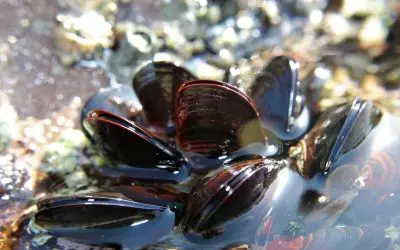
The Cozza di Scardovari PDO mussel: the black gold of the Delta
Discover the history of the only Italian mussel with a protected designation of origin and its unbreakable bond with the waters of the Delta.
Read more
5 unmissable cycling routes in the Po Delta
Itineraries to explore by bike to discover the natural wonders of the Delta, departing from and arriving at Ponte Molo.
Read moreShare this story
If this article surprised you, share it. Few people know this thousand-year history of the Po Delta.