
Po Delta in a weekend: what to see starting from Porto Tolle
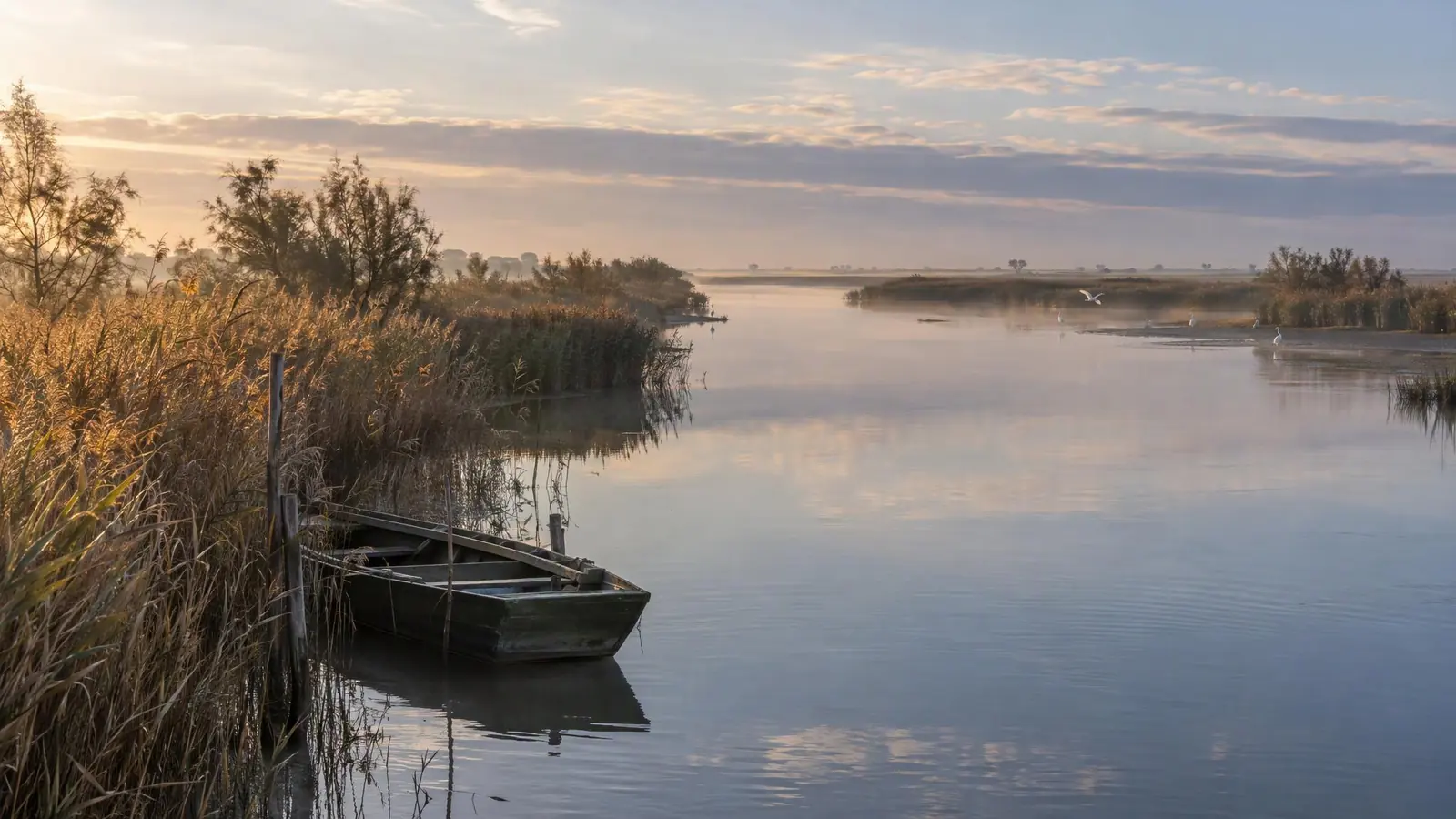
The novel Scano Boa opens with a line that leaves readers puzzled: "Il Delta Padano, per esempio, non esiste" ("The Po Delta, for example, does not exist", our translation). The author warned readers that the names of places were not to be looked for on a map. And it is still true today: Porto Tolle is hard to find on maps. In the past someone even called it "a municipality that does not exist".
The reason is simple, and yet remarkable: this land is constantly changing shape. It is a creature of water and sand that advances and remodels itself with every storm surge and every flood of the Great River. A place where a lighthouse had to move because the sea drew away, where islands are born from mud, and where villages take their names from fish, from noblemen or from the old mouths of the river.
If you have a weekend free, we will take you to discover this geography on the move. Two days starting right here, from Porto Tolle, crossing the three large islands that make up the territory: Ca' Venier, the Donzella and Polesine Camerini. A journey that follows the current from the inland all the way to where fresh water meets the Adriatic, to understand what life is like in the youngest place in Italy, where yesterday's map is already out of date today.
IN THIS ARTICLE
- Italy's youngest land, born from a canal
- Day 1, morning: the fresh water of the Po di Maistra
- Day 1, afternoon: towards the seventh mouth
- Day 1, sunset: the lighthouse that had to move
- Day 2, morning: legends, reeds and the whispered price
- Day 2, afternoon: between boat bridges and floods
- Stories, doctors and firing squads: the hidden side of the embankments
- The words to understand the Po Delta
- When to come: the seasons of the Great River
- Frequently asked questions
- The gateway to the Po Delta has been open since 1953
Italy's youngest land, born from a canal
What you are about to visit is not an ancient landscape. The modern Delta began to form less than four hundred years ago, and it did so at the hands of man. At the beginning of the 1600s, the Republic of Venice had an enormous problem: the sediment carried by the Po was silting up the lagoon, threatening to fill it in completely.
The solution was a colossal feat of engineering: the Taglio di Porto Viro (the Porto Viro Cut). At the beginning of the 1600s a long canal was dug to divert the main branch of the river southwards, forcing it to flow out into the Sacca di Goro. The Papal States, which at the time controlled Ferrara, opposed the work with strikes and sabotage. Peace came only more than a century later.
The effect of the cut was both devastating and creative. The advance of the dry land sped up, and new islands and new land appeared. Venice assigned them to the great patrician families: the Venier, the Tiepolo, the Vendramin. On that land the landscape we see today took shape, marked by pumping stations. Enormous pumps that keep dry a land that lies, for the most part, below sea level.
Today this environment is protected and recognised by UNESCO as a Biosphere Reserve. It is an exceptional refuge for nature: more than 300 species of birds live in or pass through it. A real record, which makes the Delta one of the best known places in Europe for birdwatching.
Day 1, morning: the fresh water of the Po di Maistra
Our weekend begins by heading into the island of Ca' Venier, following the course of the Po di Maistra. It is one of the best spots in the Delta for watching birds, with roads running alongside the river almost its whole length on both sides. Along this stretch you quickly grasp the vastness of the horizons and the quiet that rules the embankments, far from the towns.
Before you get lost in the reed beds, notice the history you are walking on. At Ca' Venier they keep the oldest document of the municipality: a letter from the 1600s in which Nicolò Venier, owner of the estate, asked to be allowed to build a parish. He managed it, and gave it the name of his patron saint, San Nicolò. For this very reason the whole municipality was called San Nicolò until the 1800s, when it finally took the name of Porto Tolle.
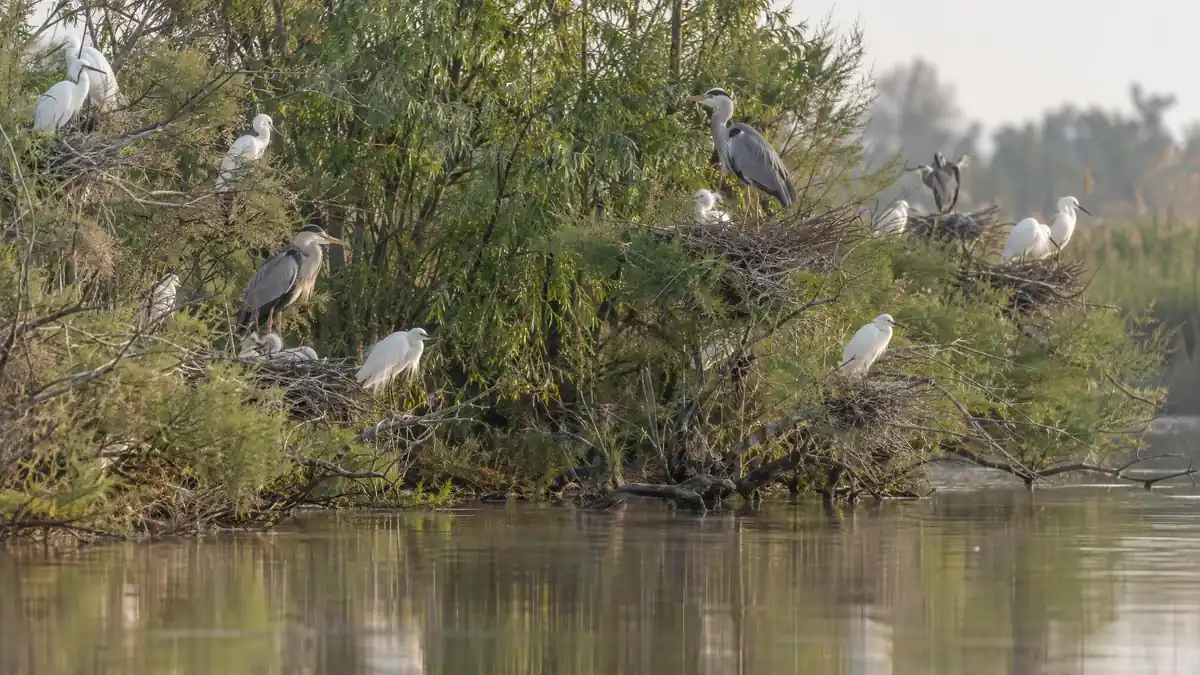
Following the river, you will find yourselves in the kingdom of the herons. The golene, the strips of land between the riverbed and the embankment that flood when the river is high, host impressive colonies. If you go by boat from Ca' Tiepolo, you will be able to see the garzaie (heronries) straight from the river.
DID YOU KNOW...
**DID YOU KNOW...** The province of Rovigo has the highest number of active heronries in the whole of Veneto. This is where you find the largest populations of little egrets, great egrets and spoonbills in the whole region.
Day 1, afternoon: towards the seventh mouth
After lunch, the journey continues towards the sea until you reach Boccasette. The name of this hamlet probably comes from the "seventh mouth" of the Po, right where the Po di Maistra flows into the Adriatic. It is a place on a frontier, also marked by a plaque showing where the 45th parallel passes: exactly halfway between the Equator and the North Pole.
The church of Boccasette is one of the oldest in the municipality. In the 1800s there was also a station of the Austrian Guardia di Finanza (customs guards) here: the old barracks has now become a hostel.
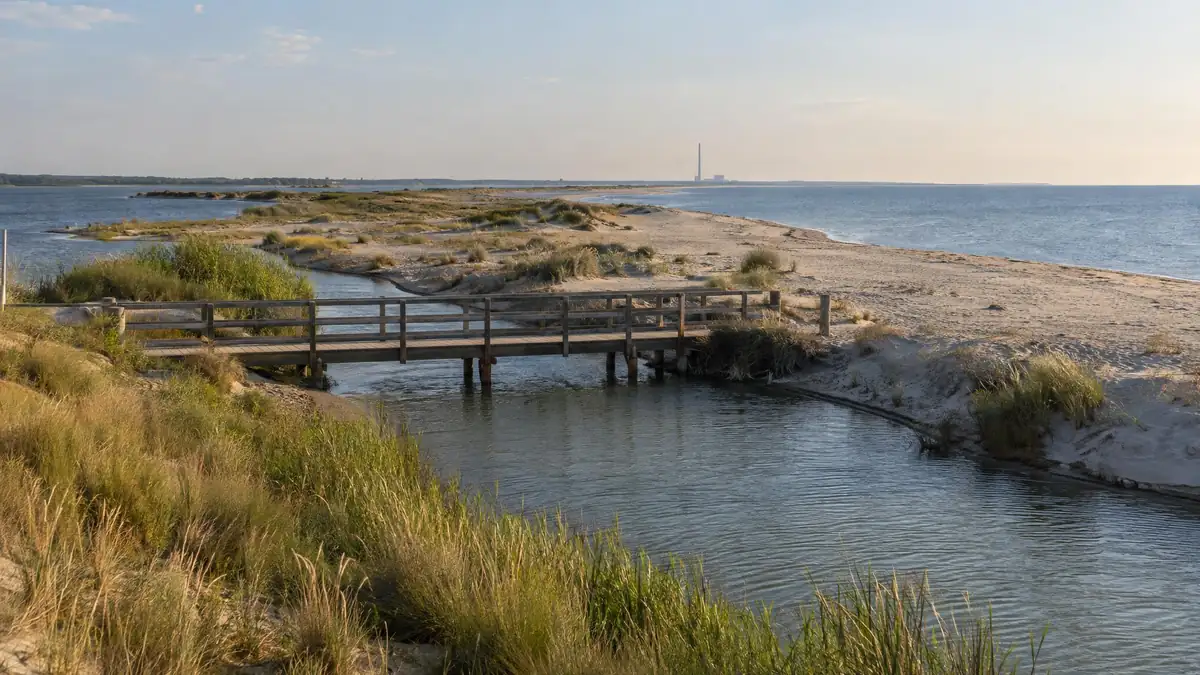
Beyond the village, the road winds through a landscape that grows ever more liquid, skirting the fishing lagoons (valli da pesca). It is an area that hosts a great many species of birds, some of them rare. The road ends in front of a wooden footbridge: crossing it, you set foot on the Scanno del Palo.
In the vocabulary of the Delta, a scanno is a tongue of sand created by the unbroken meeting of the river's sediment and the sea's currents. The Palo one is among the very few free beaches left almost in their natural state. From here you can make out, in the distance, the silhouette of the great chimney of the Polesine Camerini power station: at 250 metres, it is the second tallest in Italy.
Day 1, sunset: the lighthouse that had to move
The light of late afternoon is the perfect moment to explore Pila and the great river mouth. Here the main Po splits into three branches before surrendering to the sea: the Busa di Tramontana, the Busa Dritta and the Busa di Scirocco.
Pila began as an agricultural village, where people cut marsh reed and grew rice. Its name comes from the very pile (rice-hulling mortars) used to clean the grains. But today Pila is above all a village devoted to fishing. Sturgeon used to be fished here: in the famous film *Scano Boa*, shot in the 1960s, the first scene shows a gigantic sturgeon sold for two thousand lire right in the fish market. Today sturgeon have almost disappeared, but Pila's blue fish market is still there, in renovated buildings from the time of methane extraction.
If you take a boat, you can venture as far as the Batteria lagoon and the Burcio, one of the wildest environments of the Delta, reaching the last reed casoni (huts) of Scano Boa. But the real anomaly of this stretch of coast, the one that best tells the changing nature of the area, is the Punta Maistra lighthouse.
The first lighthouse was built in the 1800s where the town of Pila now stands. It was demolished during the Second World War. The new lighthouse stands 5 kilometres further east, on an islet that can be reached only by river: the distance measures how far the Delta has advanced in a few decades. Today the new tower gives off three white flashes every twenty seconds from sunset to sunrise. It is the easternmost masonry structure in the whole Delta.
Day 2, morning: legends, reeds and the whispered price
The second day is devoted to the island of the Donzella and the great Sacca degli Scardovari. A legend is handed down about the origin of the name "Donzella". In the 1400s these lands belonged to a Venetian nobleman, who then left them to his daughter. Tradition says the heiress never married, remaining a "donzella" (maiden) for life, and so gave her name to the whole island.
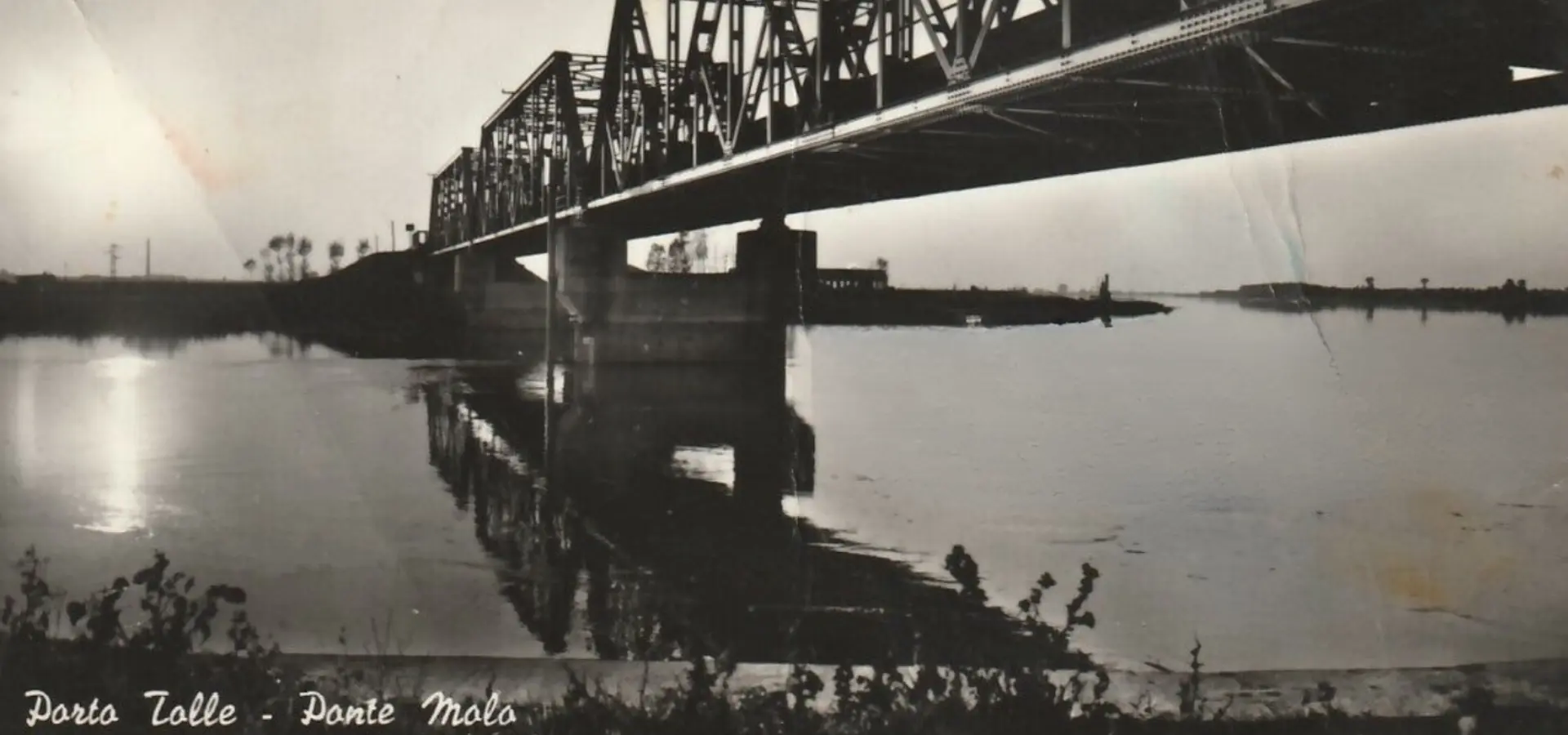
Before heading down to the Sacca, a curiosity that concerns us closely. The "Molo" bridge is the one that links the island of the Donzella to Taglio di Po. The name of our restaurant comes from right there. We were born in 1953 as a small osteria at the entrance to Porto Tolle, on the road to the sea, borrowing the name of that bridge.
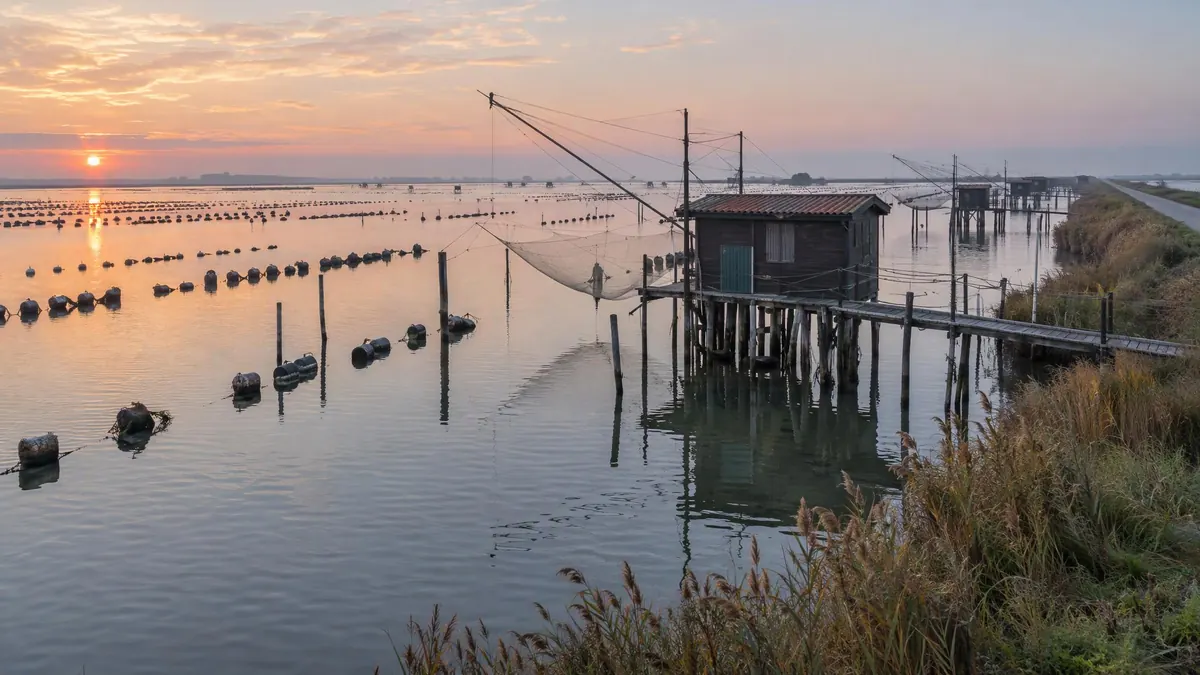
On the island opens the Sacca degli Scardovari, an immense basin of brackish water considered one of the best sites in Italy for watching sea birds. You can follow the whole embankment by car or by bike, admiring the "cavane". The cavana is the wooden hut on stilts, connected to the shore by walkways, used by fishermen to store their gear and work the shellfish.
The story of Scardovari is a concentrate of effort and ingenuity. In the 1700s some fishing families built huts of marsh reed on a "bonello", a natural rise in the land. They were fishermen of scardove, a freshwater fish that was very abundant at the time, and that is where they got their name. For decades afterwards, the local women left to work as mondine (rice weeders) in the rice fields of Piedmont.
In the middle of the 1900s the wholesale fish market was born, regulated by a very particular mechanism. The buyer approached the auctioneer and whispered his offer in his ear. That whispered, secret price then held per kilo for all the fish of that type sold during the day.
Today the Sacca is famous for its excellent products. The Cozza di Scardovari PDO mussel carries the PDO mark. In recent years oysters are also farmed here, as we tell in another article in our Magazine.
Along the Sacca you will come across the Oasi di Ca' Mello. The name comes from an old branch of the Po whose bends recalled the humps of a camel. This marshy basin is a remnant of the vast zone of valli (lagoons) that existed until the 1960s. Its enhancement was wanted by a group of citizens, followed by a project of the Region.
Day 2, afternoon: between boat bridges and floods
The journey continues towards the mouth of the Po di Gnocca. You will come across Santa Giulia, a hamlet that was once called "Polesine dei Sospiri" (Polesine of Sighs): a couple of times a year the water submerged the land and the inhabitants had to sigh and toil to make it habitable again. It was renamed by the landowner of the time, to honour his sister Giulia.
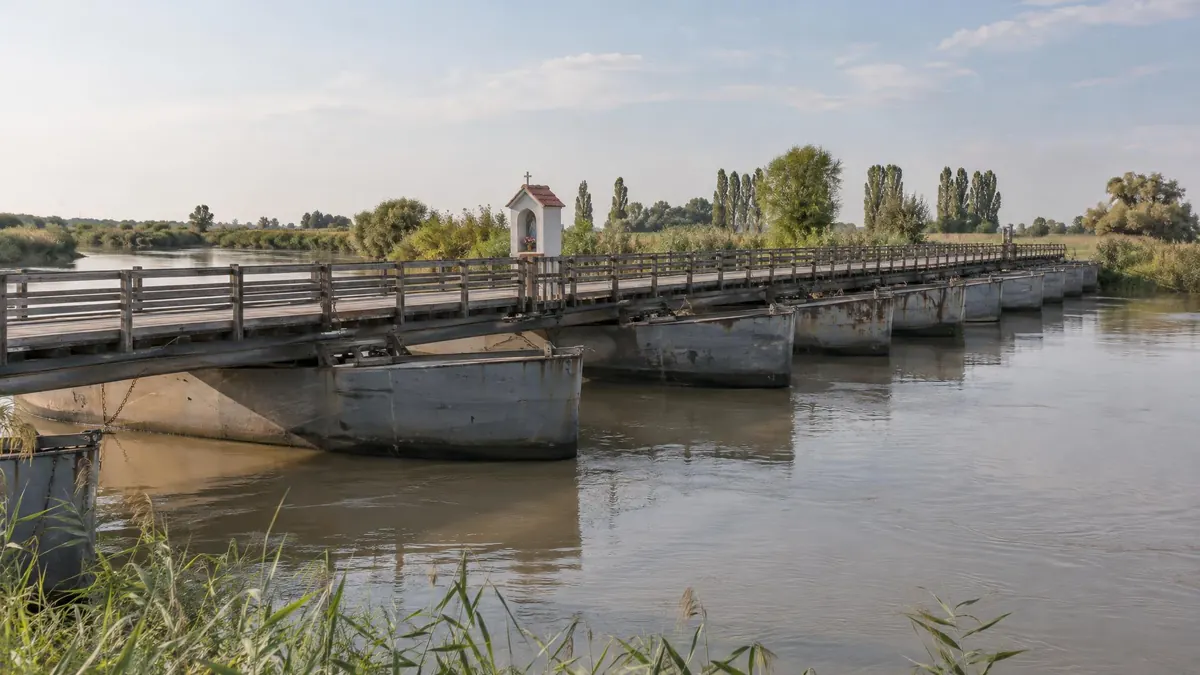
The symbol of Santa Giulia is its barge bridge over the Po di Gnocca. It rests on large boats anchored to the bed, with a deck of oak beams and a small crucifix halfway across. When the river is in flood, the bridge opens in the middle and the two halves swing round to lie along the banks, where they offer less resistance to the current. An ancient mechanism that follows the breathing of the river.
These lands know well the destructive force of water. In November 1966 the Delta suffered a devastating storm surge. The embankments gave way and the water submerged the whole island of the Donzella. The population was evacuated in a hurry: it took months of nonstop work with the pumps to drain the island and go back home.
A few kilometres from Scardovari are Bonelli and Barricata. Bonelli takes its name from the rises of land that emerged from the water and still preserves the old farm labourers' houses, in a village that grew up around a pumping station. A little further on is Barricata: crossing the floating bridge you reach a beach of fine sand, created at the end of the 1960s.
Stories, doctors and firing squads: the hidden side of the embankments
Besides the landscapes, the Delta is scattered with small stories and great historical events that crossed paths along its embankments. Marks that often go unnoticed by the distracted traveller.
Few people know, for example, that the Risorgimento shed blood on these banks. Angelo Brunetti, the patriot known as Ciceruacchio, was arrested right in the osteria of the Donzella while following Garibaldi. In August 1849 he was shot by the Austrians in the golena of Ca' Tiepolo, together with his sons and other patriots. Today a monument and the main square of Ca' Tiepolo are dedicated to him.
The Austrians again, ten years later, built two military forts at Polesine Camerini. They were there to block access from the sea and stop enemy ships from sailing up the navigable branches of the Po.
Then there are anecdotes that tell of the hardness of everyday life in the past. When malaria was common, anyone with a sick person at home let the doctor know it was urgent by hanging a red rag on a wooden pole along the road near the farmhouse.
Also at Tolle, people remember the curious story of the bronze monument in the square. It disappeared during the Second World War and was searched for in Italy and Germany. It was then found hidden under a staircase, perhaps put there to keep it from the Germans.
But there was also recognition for those who wrested land from the water. In the 1800s, a family from Adria was awarded a gold medal for the great agricultural reclamation works carried out in the Santa Giulia area.
The words to understand the Po Delta
To really travel in a place, you have to listen to its words. Here dialect is not just folklore: it is a precise vocabulary for describing a landscape that Italian struggles to bring into focus. A real verbal map, born from daily dealings with mud and water.
If you read "Ca'" on road signs, as in Ca' Tiepolo or Ca' Venier, know that it stood for the hunting or fishing lodges (casoni) of the old Venetian noble families. The "bonello" is a natural rise in the land, while the "giara" is the beach. The "busa" is each of the final branches by which the Po reaches the sea. And if you venture into the reed beds, you might hear talk of the "paradei": the long, narrow channels that link the river to the brackish lagoons.
And then there are the fish and shellfish. In the local dialect mussels are called peoci, literally sea "lice". The municipality itself, Porto Tolle, takes its name from a little wooden harbour built by fishermen in the 1700s: the "porto de le tole", that is, of the wooden planks.
The old proverbs of the lower Polesine are full of references to water. There is a saying that goes "a s'è vìst Po àlto e Po bàso": literally "Po high and Po low have been seen", meaning that in life you have seen all sorts of things. And then there is "èl Po èl rònpe ingnònd c'a no s' pènsa": the Po breaks the embankment right where you least expect it.
When to come: the seasons of the Great River
The Delta is not the same all year round. It changes colours, inhabitants and even the mood of the air, offering completely different scenes depending on the months in which you decide to explore it.
Spring is the time of awakening. The heronries fill with nests and the air vibrates with the calls of herons. From May the season of the Cozza di Scardovari PDO mussel begins, and at the end of June the area comes alive with the historic Festa del Pescatore (the Fishermen's Festival).
Summer gives you the beaches of Boccasette and Barricata. Mind the heat on the embankments and the mosquitoes, though, which remind everyone that this is, after all, a wetland. In August the big Festa del Pesce (fish festival) is held at Pila: if you come at this time, our advice is to plan your boat trips for the cooler morning hours.
Autumn is perhaps the most graceful season. The light grows low, perfect for photographs, and the lagoons fill with migrating birds. Many rentals close after October, so it is best to plan ahead and check who is open.
Winter has a Nordic, severe charm. The Sacca degli Scardovari welcomes the sea species that spend the winter here. The damp cold and the fog call for suitable clothing, but the silence broken only by the wind is worth the trip. Just be careful with the boat bridges: their use depends on the floods of the river, so it is best to find out before you set out.
Frequently asked questions
How many days do you need to see the Po Delta?
A two-day weekend is the right amount of time to explore the main islands of Porto Tolle: Ca' Venier, the Donzella and Polesine Camerini. It lets you wander along the embankments at an easy pace and take a boat trip to see the lagoons and the river mouths up close.
When is the best time to go?
Spring and autumn are perfect for watching birds and enjoying a climate less tiring than summer. Summer is the season of the natural beaches, but it comes with the heat on the embankments and the mosquitoes of the wetland.
How can you see the Pila lighthouse?
The lighthouse stands on an islet and can be reached only by river. To admire it up close you need a boat, and it is best to find out about excursions beforehand.
Where do you park at the Sacca degli Scardovari?
The whole embankment of the Sacca can be followed by car or by bike, and along the road you pass the fishermen's cavane.
Are the boat bridges always open?
Yes, barge bridges like the one at Santa Giulia can be crossed by car. Crossing always depends on the mood of the river, though: if the Po is in flood the bridge is opened in the middle, if it is in low water crossing on the ramps can become problematic. It is always best to ask for confirmation before you set out.
What does "scanno" mean?
A scanno is a tongue of sand that forms in front of the river mouth, born from the constant tug of war between the river's sediment and the sea's currents. Some scanni host beaches that have stayed almost in their natural state.
What is a golena?
A golena is the strip of land between the riverbed and the high embankment. It is a zone that floods naturally when the river is high and hosts woods and big colonies of birds.
Where can you eat after the tour?
At Ponte Molo, at Via Borgo Molo 5, right at the entrance to Porto Tolle. We are open every day, for lunch and dinner, so you can taste fish from the Pila fish market, the Scoglio 1953 and, from May to July, the Cozza di Scardovari PDO mussel.
The gateway to the Po Delta has been open since 1953
There is a date that ties together the recent history of this land. In 1953, in the years when the land reform assigned the land to farm labourers and Scardovari opened its new schools, a small osteria was born at the entrance to Porto Tolle. It was a place of refreshment for the fishermen and farmers of the area.
Today, on that very spot on the road to the sea at Via Borgo Molo 5, stands our Ponte Molo restaurant and hotel. For over seventy years we have been the gateway to the Delta: the place you set out from in the morning to tour the embankments and come back to in the evening to sit down at the table.
We are open every day, for lunch from 12:00 to 14:30 and for dinner from 19:00 to 22:30. In the kitchen we bring the places you have visited: fish from the Pila fish market, oysters, bisato (eel) and, from May to July, the Cozza di Scardovari PDO mussel served alla polesana. All year round, in the steaming pan, we serve our Scoglio 1953, to remember where we started, and every Wednesday evening we look forward to seeing you for the Mercoledì Fritto, to share Na Barca de Fritto with a glass of Vino delle Sabbie (the wine of the sands).
If your weekend needs more than a day, upstairs you will find our rooms with buffet breakfast included from 7:30 to 9:30, made with local products and cakes made by us. Parking is free, handy for leaving the car and starting your exploring.
The Po Delta is a land that is constantly changing. But a laid table, with us, is there every day.
Sources and further reading
Territorio, Vivere Porto Tolle, Municipality of Porto Tolle
Ca'Tiepolo, Vivere Porto Tolle, Municipality of Porto Tolle
Ca'Venier, Vivere Porto Tolle, Municipality of Porto Tolle
Boccasette, Vivere Porto Tolle, Municipality of Porto Tolle
Donzella, Vivere Porto Tolle, Municipality of Porto Tolle
Scardovari, Vivere Porto Tolle, Municipality of Porto Tolle
Polesine Camerini, Vivere Porto Tolle, Municipality of Porto Tolle
Pila, Vivere Porto Tolle, Municipality of Porto Tolle
Santa Giulia, Vivere Porto Tolle, Municipality of Porto Tolle
Tolle, Vivere Porto Tolle, Municipality of Porto Tolle
Ca'Mello, Vivere Porto Tolle, Municipality of Porto Tolle
Faro di Pila, Veneto Region, Veneto Around Me
Parco Regionale Veneto del Delta del Po: l'area protetta, Parks.it, portal of the Italian parks
Taglio di Porto Viro, Wikipedia
Continue exploring the Delta

Pink flamingos in the Po Delta
Complete guide to admiring these magnificent birds in their natural habitat.
Read more
5 unmissable cycling routes in the Delta
Cycling routes to discover the natural wonders of the area.
Read more
The Cozza di Scardovari PDO mussel: the black gold of the Po Delta
The only Italian mussel with a protected designation of origin, born where the Po meets the Adriatic.
Read moreShare this story
If you enjoyed this itinerary, share it with anyone thinking about a weekend in the Po Delta.