
The Po Delta bisato: nature's most mysterious journey
Listen to this article
15 minutes listening • Nature's most mysterious journey
Loading audio…
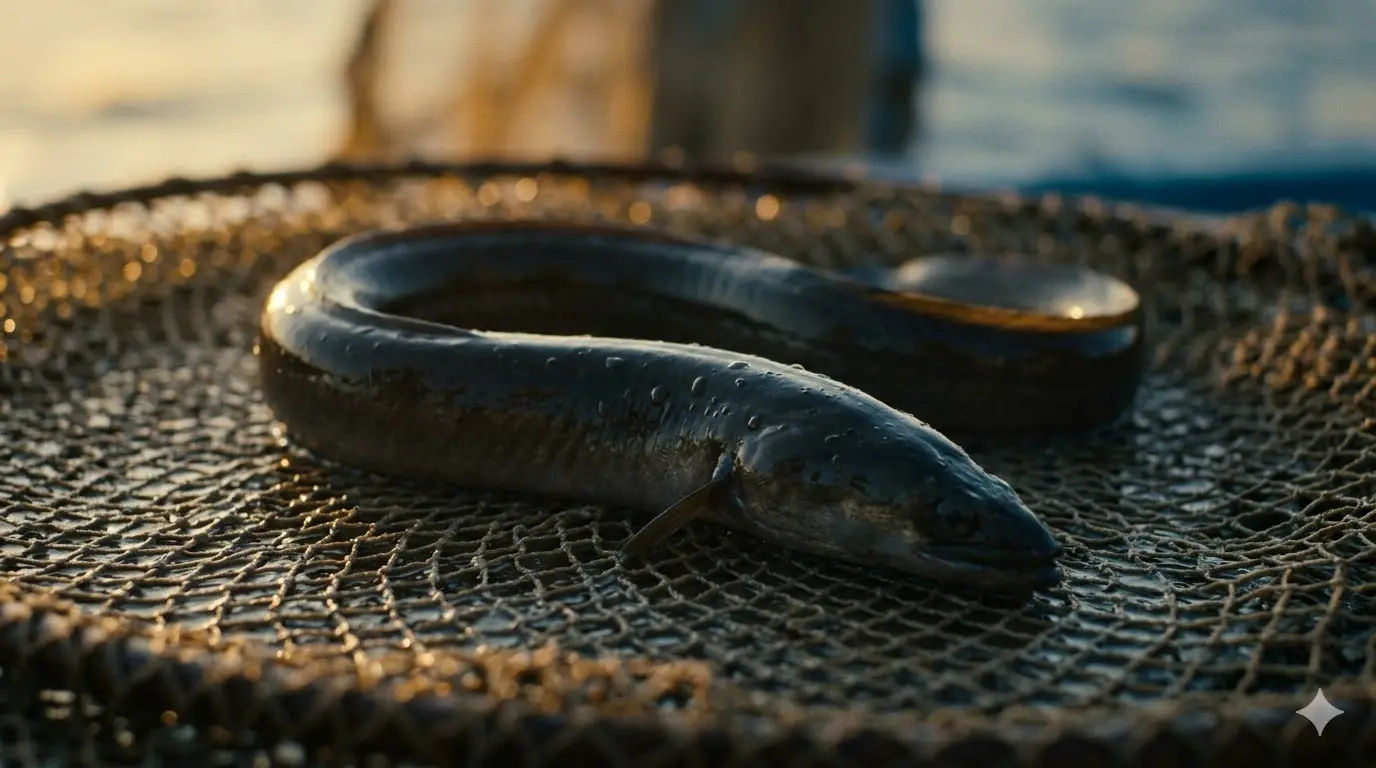
No one has ever seen them being born. No one has ever seen them mate. No one knows how they find their way. Yet every autumn, when the first fogs wrap the Po Delta, thousands of eels leave our lagoons for a 6,000 kilometre journey to a sea with no coasts. A place so unlikely it seems made up. And they never come back.
Around here we call it bisato. Aristotle believed it was born from mud. Medieval fishermen thought it was a cursed snake. Modern science, after two thousand years of study, still admits to understanding almost nothing.
How does a fish navigate across an ocean without ever having seen it? Why do all the eels in Europe, from Scotland to Turkey, from the Po Delta to the Norwegian fjords, meet in the exact same spot to breed? And above all: what really happens down there, in the depths of the Sargasso Sea, where no human eye has ever reached?
This is the story of the most mysterious fish in the world. An animal that has lived in our waters for 50 million years, that fed Etruscans, Romans and greedy Popes, and that today risks disappearing forever.
It is also the story of those who fish it, those who cook it, and a territory, our Po Delta, that would not be the same without the bisato.
Why we call it "bisato"
If you come around here and ask for eel, they will look at you a bit puzzled. Here we say bisato, with that soft "s" that slips away like the fish itself through your hands. The word, also recorded in the Treccani dictionary, probably comes from "biscia", the freshwater snake it shares its sinuous shape with.
It is a name that tells a geography. North of the Po, in Veneto, we exclusively use bisato. South, towards Comacchio and the Ferrara area, "anguilla" or "capitone" prevails for the larger females. Two words for the same animal, two banks of the same river, two traditions that look at and recognise each other.
The older fishermen still distinguish between the bisatèo (the young one, perfect for frying) and the bisato femenal or argentina, the adult female ready for the big journey, with her belly shining like silver. Even a canal bears this name: the Canale Bisatto, in the Padua area, named for its winding course "like an eel".
Anyone wanting to see this difference told in a spectacular way can watch the first episode of Dinner Club on Amazon Prime Video. Chef Carlo Cracco and Fabio De Luigi navigate the Po Delta in a houseboat to the Pila fish market, where fisherman Natale Mantovan prepares bisato in tecia on camera in his hut. A television moment that brought our traditions to 184 countries around the world, and clearly shows how, north and south of the Po, the same fish becomes two different cultures.

Dinner Club, Season 1. Carlo Cracco and Fabio De Luigi discovering the bisato and the flavours of the Po Delta. Available on Amazon Prime Video

A journey that defies imagination
What the bisato does is perhaps the most incredible journey in the animal kingdom. Think about it: a fish that is born in the Atlantic Ocean, grows in our lagoons for 10, 20, even 30 years, and then one autumn day decides it is time to go back to where it all began.
The mystery of the Sargasso Sea
The Sargasso Sea is a place that seems made up: a sea with no coasts, defined only by ocean currents, full of floating algae that give it its name. Here, thousands of metres deep, all European eels meet to breed. All of them. The ones from the Po Delta just like the ones from Scotland, the ones from Spain just like the ones from Turkey.
And here is the biggest mystery: no one has ever seen an eel breed. Never. In the whole history of humanity, not a single mating, egg, or breeding adult has been observed. Danish naturalist Johannes Schmidt dedicated 17 years of his life (from 1904 to 1921) to finding the answer, mapping smaller and smaller larvae across the Atlantic, without ever witnessing the final act.
Only in 2022, for the first time, a scientific study proved that eels actually reach the Sargasso Sea: out of 26 specimens fitted with satellite transmitters, 5-6 reached their destination. After centuries of guessing, finally some proof.
Five lives in one body
The bisato goes through such radical changes that for centuries scientists thought they were looking at different species. Only in 1893 did two Italians, Giovanni Battista Grassi and Salvatore Calandruccio, prove that the mysterious transparent larva called Leptocephalus was actually the first stage of the eel. A discovery that revolutionised marine biology, later published by the Royal Society of London in 1896.
The five life stages of the bisato:
Leptocephalus: a glass leaf, transparent and flat, just a few millimetres long at birth. It is born in the Sargasso Sea and lets itself be carried by the Gulf Stream for 1-3 years.
Glass eel: reaching European estuaries, the larva turns into a small, completely transparent cylinder. In the Po Delta, the glass eels arrive between February and March.
Yellow eel: the longest stage, from 3 to 25 years in our fresh waters. The back turns greenish, the belly yellowish. It grows, feeds, waits.
Silver eel: when the time comes, everything changes. The eyes double in size to see in the ocean depths, the belly turns silver, the digestive system shrinks. It will never eat again.
The final journey: on moonless autumn nights, the bisato leaves. It swims for 12-18 months, covering 6,000 kilometres without feeding, living only on the fat stored during years of life in the Po Delta.
How long the bisato has lived in the Po Delta
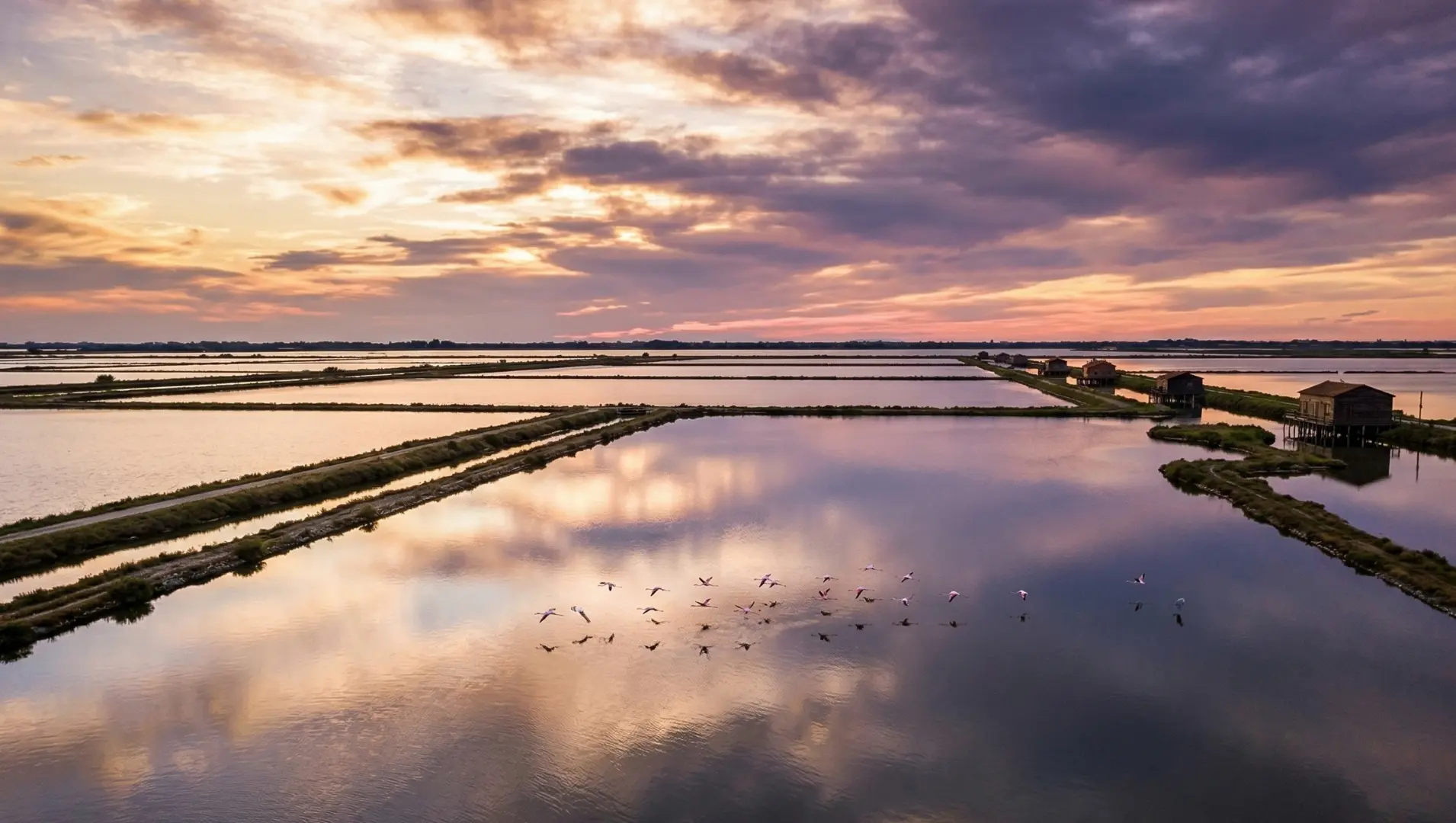
Eels lived in these lands before civilisation existed. Fossil records show that the Anguilla genus has been swimming in European rivers for at least 50 million years. Long before the Po took its current shape, before the great ice ages, before humans.
The Etruscans and the eel trade
The city of Spina, founded by the Etruscans at the end of the 6th century BC right in the area we now call Valli di Comacchio, was one of the major ports of the Mediterranean. The necropolis discovered in 1922 revealed over 4,000 tombs full of treasures, proof of a civilisation that thrived on the lagoon's resources, eels included.
The Romans appreciated them so much they farmed them. Strabo, Columella and the food writer Apicius mention them in their works. Patrician villas had dedicated fishponds, and the best eels were paid for in gold.
Dante and the greedy Pope
In the Middle Ages, the eel took on a double meaning. Its snake-like shape linked it to original sin, making eating it a "forbidden treat" especially tempting on fasting days.
Dante Alighieri, in Purgatory (Canto XXIV), condemns Pope Martin IV among the gluttonous. His sin? Drowning eels in Vernaccia wine before roasting them. On his tomb was written: "Gaudent anguillae quod mortuus hic jacet ille", "The eels rejoice because he who skinned them lies dead here".
In 1797, even Napoleon recognised the collective ownership of the eel to the people of Comacchio in the Treaty of Campo Formio, so important was it for the local economy.
How the bisato was (and is) fished
The lavorieri: clever traps
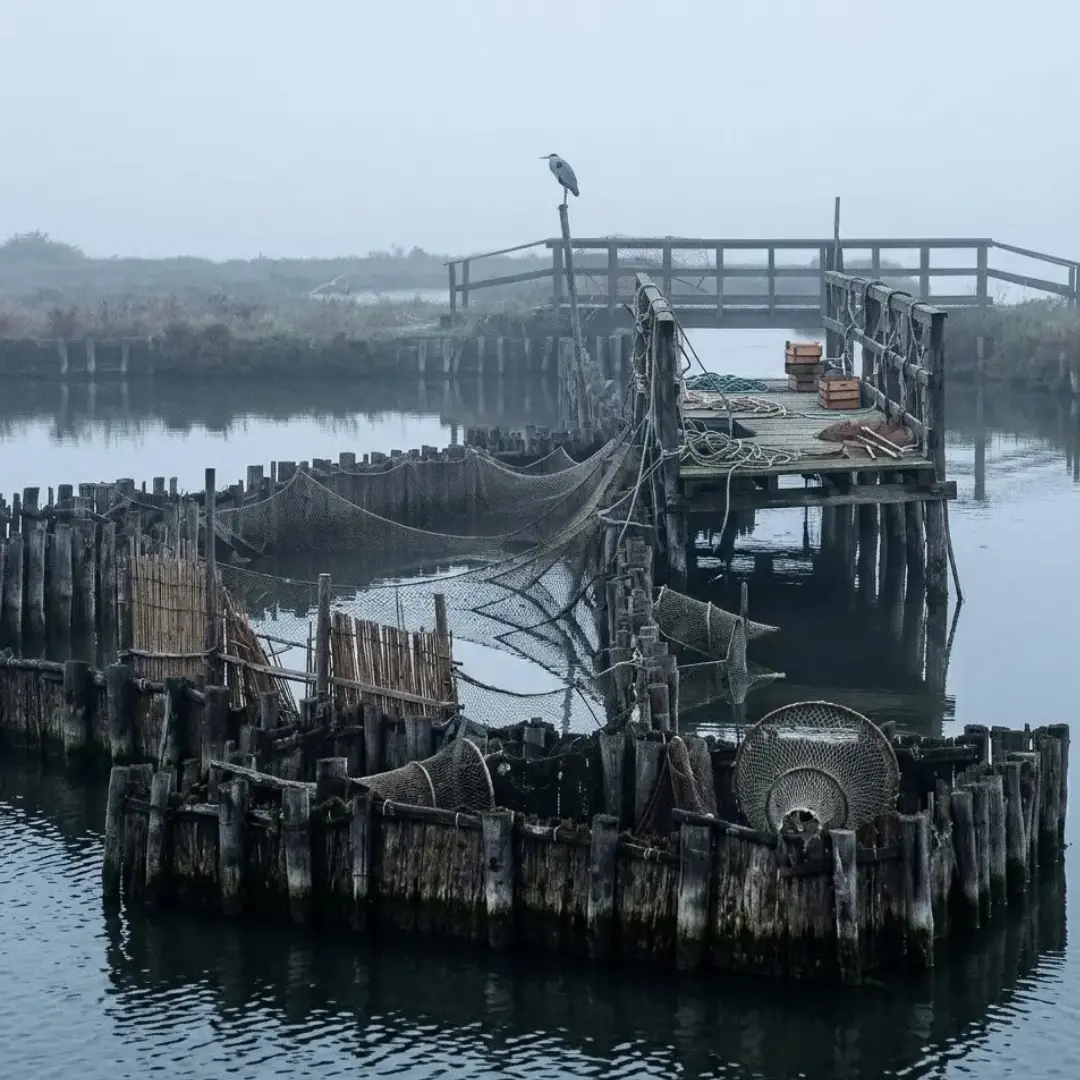
The heart of traditional fishing is the lavoriero, a clever arrow-shaped fixed trap placed in the canals between the lagoons and the sea. The idea is simple but brilliant: a series of grids with increasingly narrow diameters allows the eels to enter, but not to leave.
Traditionally built with chestnut poles and marsh reeds, today improved with steel grids, the lavorieri use the bisato's migratory instinct. When silver eels feel the call of the sea in autumn, they head for the lagoon mouths, and end up in the trap.
Fishing took place (and still does, where allowed) on moonless nights, with Bora wind and high tide. These are the perfect conditions: the dark reassures the eels, the cold wind pushes them towards the sea, the high tide opens the passages.
The vallanti: serfs of the Po Delta
The vallanti were the workers of the fishing lagoons. They lived in casoni, reed huts with no running water or electricity, for months on end, far from their families. Conditions were so tough they were called "serfs".
Their job: watching the lavorieri, catching the eels, preparing them for the market. A very hard life, marked by tides and seasons, told in songs and stories still passed down today.
The fiocinini: romantic bandits of the lagoons
Alongside the vallanti there was a more romantic and tragic figure: the fiocinino, the poacher who braved the guards on dark nights to catch eels with a spear.
Being a fiocinino was a "family status" passed from father to son. The most famous was Sante Policronio Nordi, who died at 84 with 84 arrests to his name, one for every year of his life. The last fiocinino, Elio Ghiberti known as "Batono", passed away in 2011, taking the secrets of an ancient trade with him.
The bisato in the kitchen: traditional flavours
Bisato in tecia (Venetian-style stewed eel)
It is the dish that best represents our lagoon tradition. "Tecia" in dialect means pan, and in that pan all the wisdom of our grandmothers comes together.
The traditional preparation:
You clean the bisato, cut it into 5-centimetre pieces and leave it in cold water with a little vinegar for an hour. This removes the "freschin" smell, that river scent not everyone likes. Then you prepare a base of onion, garlic and parsley, brown the floured pieces, splash with white wine, and add tomato and bay leaves.
Slow cooking, 25-30 minutes, and at the end a splash of vinegar to balance the richness of the fish. It is served with white polenta, the kind our grandmothers used to make.
In Murano, master glassmakers cooked the bisato on the ara, the red-hot stone surface used to work glass. A unique cooking method, impossible to copy, that tells the story of how lagoon trades mixed.
Marinated eel from Comacchio
Crossing the Po, in Comacchio, the preparation becomes almost a ritual. At the Manifattura dei Marinati, a historic 1818 building now a living museum, eels are still cooked in front of 12 holm oak wood fireplaces.
After spit-roasting, they are dipped in "zangolini", wooden containers, with brine: white wine vinegar, Cervia sea salt and bay leaves. They keep like this for months, a method that has earned Slow Food Presidium status.
The bisato at Christmas
Eel is the undisputed star of Christmas Eve dinner in much of Italy. The Christian tradition of avoiding meat on December 24th has made this fish the symbol of the holidays.
In Naples, the "capitone" symbolically represents the snake of sin defeated by the birth of Christ. Women must kill and cook it "in memory of Eve's disobedience". A ritual that turns dinner into an exorcism of evil.
Here in Veneto, holiday bisato is prepared stewed or grilled, paired with Fortana del Bosco Eliceo DOC, the sparkling red wine of our sandy lands. A local saying goes: "God put woodland wine next to the eel!"
Taste the grilled Bisato at Ponte Molo
Our bisato is always on the menu: a whole eel slowly grilled over the coals, served with polenta as has always been done in the Po Delta. Pure simplicity, since 1953.
The oldest eel in the world
Among the many curiosities surrounding the bisato, one deserves to be told. Its name was Åle and it lived in a well in the Swedish town of Brantevik.
It was thrown into the well in 1859 by little Samuel Nilsson, then 8 years old, following an old Nordic tradition: eels in wells eat insects and larvae, keeping the water clean. Åle stayed there for a century and a half, surviving two world wars, the industrial revolution, and the arrival of the internet.
When it was found dead in August 2014, its age was estimated at around 155 years. Researchers from the Swedish University of Agricultural Sciences tried to verify its age by examining the otoliths, the bone structures in the fish's ear that work like tree rings, but unfortunately they were not found in the remains. Åle's exact age therefore remains a mystery, although experts agree it was an exceptionally long-lived specimen.
How is it possible to live so long? In the wild, eels live 10-20 years, 40 at most. But Åle was in a protected environment: no predators, constant temperatures, and above all no call of the sea. The mechanism that triggers the breeding migration, and the resulting death, never activated.
A critically endangered species
We also need to talk about the hard part. The bisato is classified by the IUCN as Critically Endangered, the same level as the North Atlantic right whale. According to official data from the European LIFEEL project, the population has dropped by 99% compared to pre-1980s levels.
The causes are many:
- Overfishing: about 2 billion young eels are caught every year for Asian farms.
- Migration barriers: over 1 million dams and barriers break up European rivers. Hydroelectric turbines kill 22-37% of the eels trying to pass.
- The Asian parasite: Anguillicola crassus, introduced in the 1980s, infects the swim bladder, compromising migration ability.
- Pollution: PCBs and contaminants build up in fatty tissues for decades, compromising breeding.
- Poaching: glass eels (young eels) are worth up to 6,000-9,000 euros a kilo. About 100 tonnes are illegally trafficked to Asia every year.
The LIFEEL project: hope comes from the Po Delta
But there is also good news. The Po Delta Park is on the front line to save the bisato, with one of the most ambitious conservation projects in Europe.
The LIFEEL project (LIFE19 NAT/IT/000851), with a budget of 5.4 million euros and active until 2026, is taking concrete action:
New fish passages on the rivers of the Po basin: 10 specific structures for young eels on the Panaro and Secchia rivers and in three branches of the Po Delta, which once completed will reopen over 1,000 km of waterways to migration.
An innovative photoelectric deterrent system at the Creva dam on the Tresa river, which diverts eels from the turbines using their natural dislike of light. During the second migration season (2024-2025), 73% of marked specimens managed to get past the obstacle and continue towards the sea.
The annual release of silver eels in the open sea. In December 2024, about 1,000 specimens were released, some fitted with satellite transmitters to track their migration. Releases also continued in December 2025.
A key fact: the eels from our lagoons have the highest breeding quality in Italy and Europe. This makes the Po Delta strategic for the survival of the whole species. Every bisato that leaves here for the Sargasso Sea is a hope for the future.
Curiosities you will not forget
How do they navigate? Eels have a real internal "magnetic map" that detects changes in the Earth's magnetic field. A study published in 2017 in the journal Current Biology (Naisbett-Jones et al.) showed that young European eels use this map to navigate towards the Gulf Stream. In 2019, research by the University of Miami and the Norwegian Institute of Marine Research (Cresci et al., published in Communications Biology) discovered something even more surprising: young glass eels imprint the magnetic direction of the tidal currents of the estuary where they grow, and use this memory to navigate the ocean decades later.
Male or female? Sex is not determined at birth, but depends on the environment. The specimens that stay near the sea become males (smaller, 40-60 cm). Those that go inland become females (up to 150 cm and 6 kg).
How far do they swim? At an average speed of 6-7 km a day, eels take 12-18 months to reach the Sargasso Sea. During the whole journey they never eat: they live entirely on stored fat.
Why do they die? The eel is semelparous: it breeds only once in its life and then dies. All the energy stored over years of life in our waters is dedicated entirely to migration and breeding.
The bisato at Ponte Molo
Since 1953, the large grill at Ponte Molo has been lit in the heart of the Po Delta. And since then, the bisato has been one of the undisputed stars of our kitchen.
No elaborate preparations, no complicated sauces. Our Po Delta Bisato is pure simplicity: a whole eel of about 500 grams, slowly grilled over the coals until the skin gets crispy and the meat melts in your mouth. Served with polenta, as has always been done in these lands.
It is the oldest and most honest way to cook this unique fish. The grill does all the work: the heat dries the excess fat, the flame gives that smoky scent no oven can copy, time turns a simple ingredient into something to remember.
The bisato is always on our menu. To discover all our dishes and prices, you can check the full menu on our website.
When you taste it, think of the incredible journey this fish has made, the fishermen who for generations braved the cold nights of the lagoons, the grill that has welcomed the flavours of the Po Delta for over seventy years. Think that every bisato arriving on your table is part of a cycle that has lasted millions of years, and that today we have a responsibility to protect.
Because the Po Delta is not just a place: it is a living heritage, made of waters, flavours, stories. And the bisato is perhaps its truest symbol.
As an old Venetian proverb said: "Dòna, gata e bisata no mor mai", women, cats and eels never die. Let's make sure that stays true for a long time.
Find out more
- Progetto LIFEEL: lifeel.eu
- Po Delta Park: Educational programme "Piacere, signora anguilla" with the chance to watch the release of the eels in December
- Manifattura dei Marinati di Comacchio: Living museum where from October to December you can watch the traditional cooking in the 12 original fireplaces
- Sagra dell'Anguilla di Comacchio: Every year between September and October
- Dinner Club - Season 1, Episode 1 (Po Delta): Available on Amazon Prime Video
Continue exploring the Delta
The Cozza di Scardovari PDO mussel: the black gold of the Po Delta
The only Italian mussel with a protected designation of origin, born where the Po meets the Adriatic.
Read more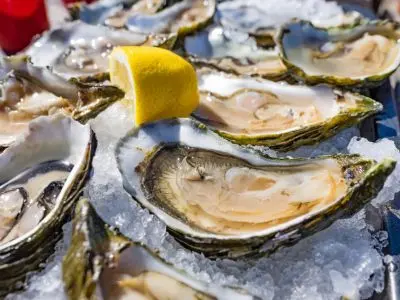
The Po Delta oyster: a hidden treasure
The specialty born from the meeting of fresh and salt water.
Read more
Pink flamingos in the Po Delta
Complete guide to admiring these magnificent birds in their natural habitat.
Read moreShare this story
If this article fascinated you, share it. Few people know the incredible story of the Po Delta bisato (eel).