
Pila, the fishing port of the Po Delta: history and traditions
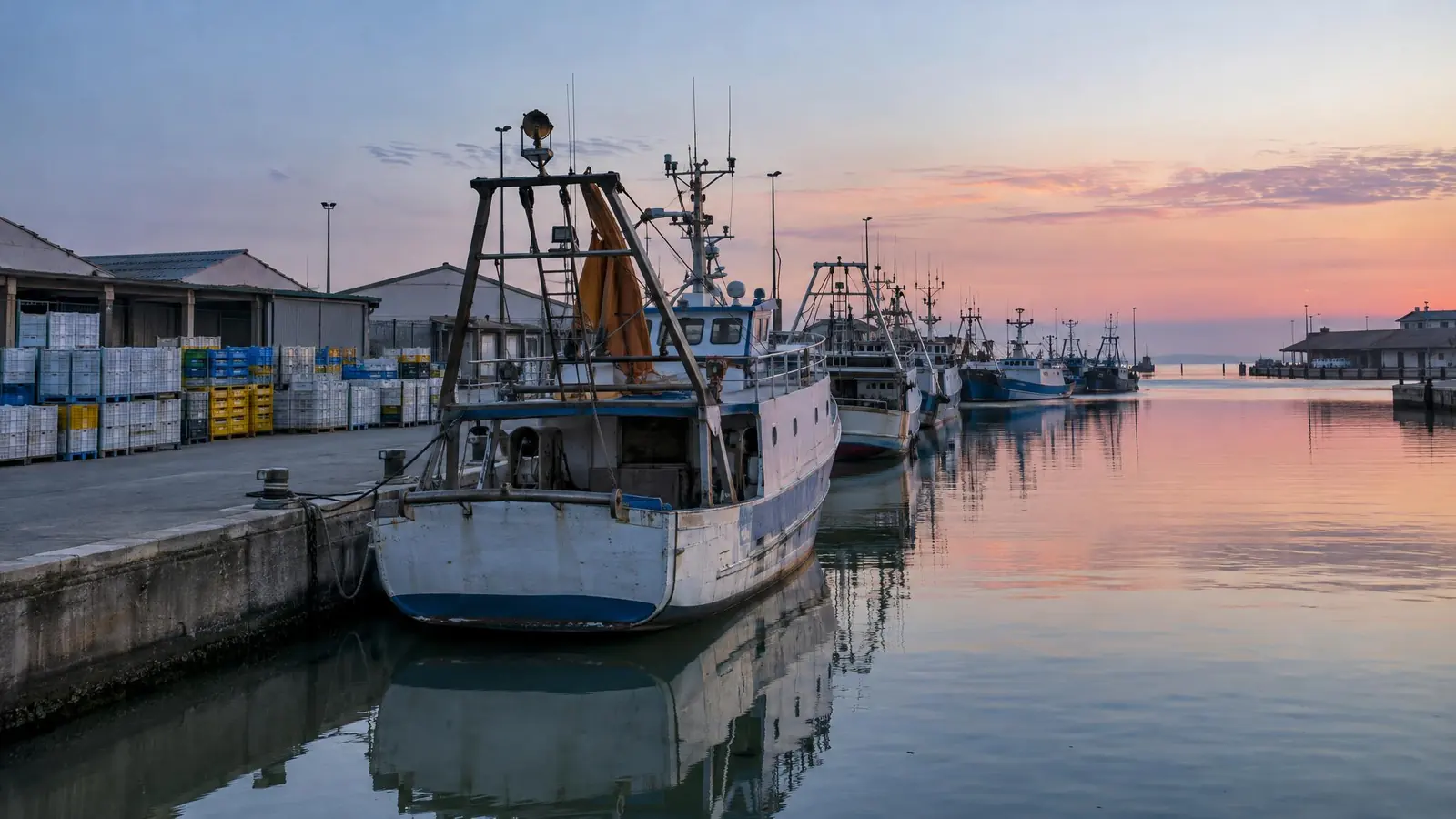
Picture the clock striking four in the morning. While most of the world sleeps, at Pila the boats are heading out to sea. A "volante" (a midwater trawler) leaves the port, sails out to open water and lowers its net in suspension. Three hauls to take the crates of anchovies. When the daily quota is reached, they turn back. Once back, the auction is held right on the quayside. This is how the day begins in this far edge of our territory.
If you come this way, you will notice at once that Pila is not a village like the others. It is the outpost where the Great River finally surrenders to the sea. And yet, more fish has passed through this strip of land surrounded by water than through any other fish market in Veneto.
This is the story of a village born on an island that the Po built with its sediment. It is the tale of a place that began as agricultural and is now devoted to fishing, of a lighthouse that had to move and of old words that still echo among the nets. A journey into the heart of the first fish market in Veneto, to understand where what we eat really comes from.
IN THIS ARTICLE
- The village born on the river's land
- The lighthouse that had to chase the sea
- Two auctions, two worlds: the evolution of the fish market
- The journey of the eels and the marote under oar
- The great fleet and the commuters of the sea
- The words of fishing: the vocabulary of the Delta
- The perfect storm: subsidence and the blue crab
- The numbers of a Veneto record
- The rhythms of nature and the fishing closure
- Frequently asked questions
- From the Pila market to our table
The village born on the river's land
To understand Pila, you first have to understand the titanic force of the river that flows beside it. The land we walk on today is recent: it appeared with the Taglio di Porto Viro (the Porto Viro Cut), over four centuries ago. It was the Republic of Venice that decided to divert the course of the Po towards the south-east, giving shape to the Delta of today. New land, mostly swamps and marshes, took the place of the salt water, pushing the coastline further and further out.
The Po di Pila is the most recent part of the Delta, advancing at a fast pace over the last hundred and fifty years. This single branch carries most of the fresh water and sediment that enters the Delta. It reaches the sea by splitting into three mouths: the Busa di Tramontana, the Busa Dritta and the Busa di Scirocco. The Busa Dritta, the point furthest out towards the sea, is exposed to the winds and has an unstable mouth that keeps changing.
The story of the village, however, is tied to the mainland much more than you might imagine today looking at its seafaring vocation. The very name, "Pila", comes from the "pile" used for hulling the rice that was once grown throughout the area. The dialect verses of Berto Boscolo Morosini tell the toil of life in the rice fields well: "a ciapavo pileta e pilon e po in tél cason a pilavo fin caiera ora d'magnare" (I picked up pileta and pilon, then in the casone I hulled until it was time for lunch). Pila was born, in fact, as an agricultural village, lived in by farmers.
Then came the destructive force of water. In the 1950s the sea broke the fragile embankments that protected the hamlet. The land was flooded and people had to leave their homes. In those same years the Cooperativa Pescatori di Pila (the Pila fishermen's cooperative) developed, wanted by the fishermen themselves: today fishing is the driving sector of the hamlet's economy.
The lighthouse that had to chase the sea
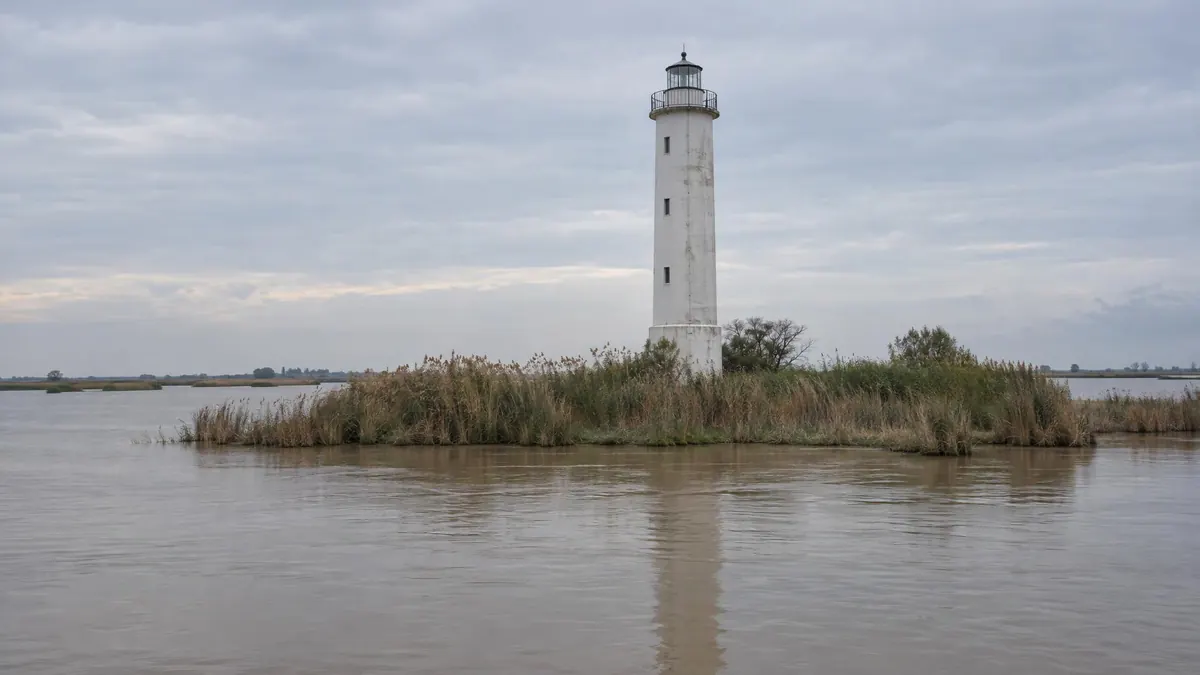
There is a lighthouse in the Delta that tells the story of the land's advance: the Punta Maistra lighthouse, also called the Pila lighthouse. The distance between the old and the new lighthouse is the evidence of how the Delta has advanced in just a few decades.
The first lighthouse was built in the late 1800s. At the time, it stood exactly where the built-up area of Pila is today. During the war it was pulled down. It was rebuilt after the war, but much further east.
The new lighthouse has "moved house": today it stands several kilometres from Pila, to the east. It is an imposing circular structure, built of concrete with a copper roof. It rises on an islet reachable only by boat, on the left bank of the Po di Pila. Its lantern gives off three white flashes every twenty seconds, visible from far away. It is to all intents and purposes the easternmost masonry building in the whole Delta.
Around its light revolve stories of literature, of waiting and of toil. Gian Antonio Cibotto, in his novel Scano Boa, described the light of the lighthouse that "flashed intense, protective, like a human voice, reassuring" (our translation). On the scanni of the Delta, in the past, people went to fish for sturgeon, which in spring passes from the sea into the river to spawn: a large specimen could be the fortune of a whole season.
DID YOU KNOW...
The story goes that in the 1950s Eugenio Montale climbed the lighthouse and that up there he wrote his famous poem *L'anguilla*. In reality the poem was written before the new lighthouse was rebuilt. A suggestive story, but one the dates do not confirm.
Two auctions, two worlds: the evolution of the fish market
Think about how fish is bought today, with a remote control in hand, and how it was done in the old days. Two completely different ways of selling tell the shift from the whisper in the auctioneer's ear to the electronic auction.
At the nearby Scardovari market they used a system that was unique of its kind: bargaining "a orecchio" (by whispering in the ear). The trader approached the auctioneer and whispered his offer in his ear. That price then held for all the fish of that type sold that day.
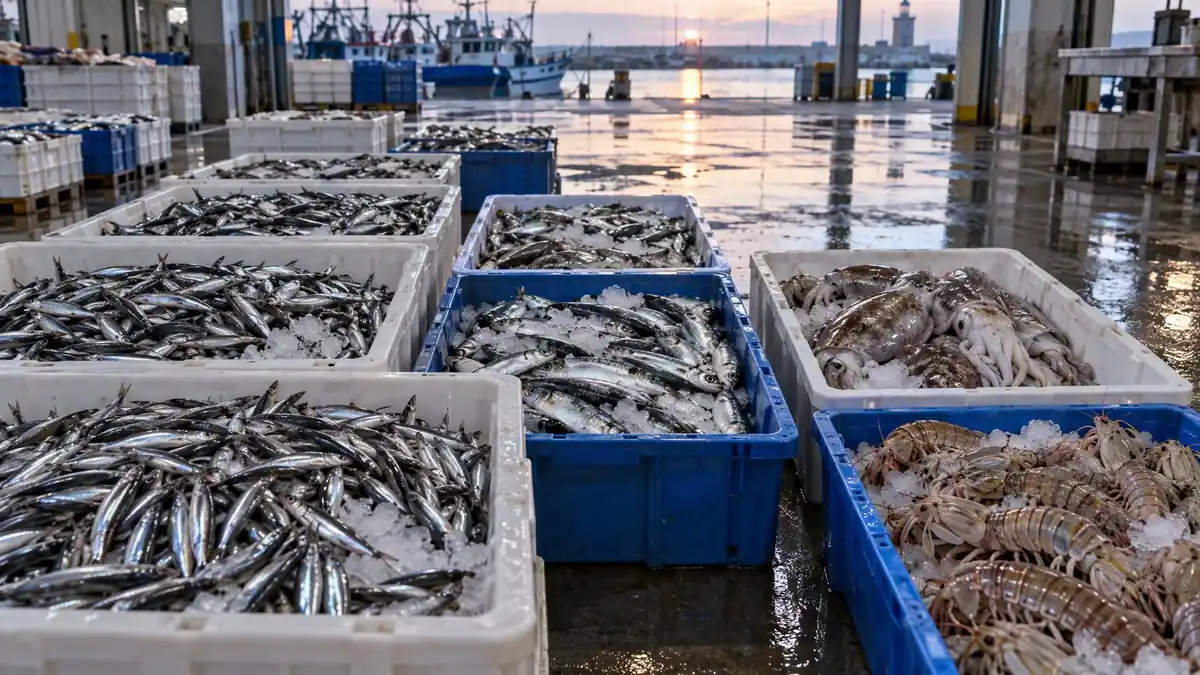
Today the auctions are electronic and descending. The traders arrive with their remote controls and the Pila market is a point of reference for many wholesalers in the area. It starts from an opening price and goes down: the first to press the button wins the lot. It is a real contest of nerves and timing. If you wait too long hoping for a better price, you risk someone else snatching the deal from under your nose.
The Pila market also has its health checks: every month samples of water, ice and fish are taken, and every day the health officer checks for the absence of parasites such as Anisakis.
The journey of the eels and the marote under oar
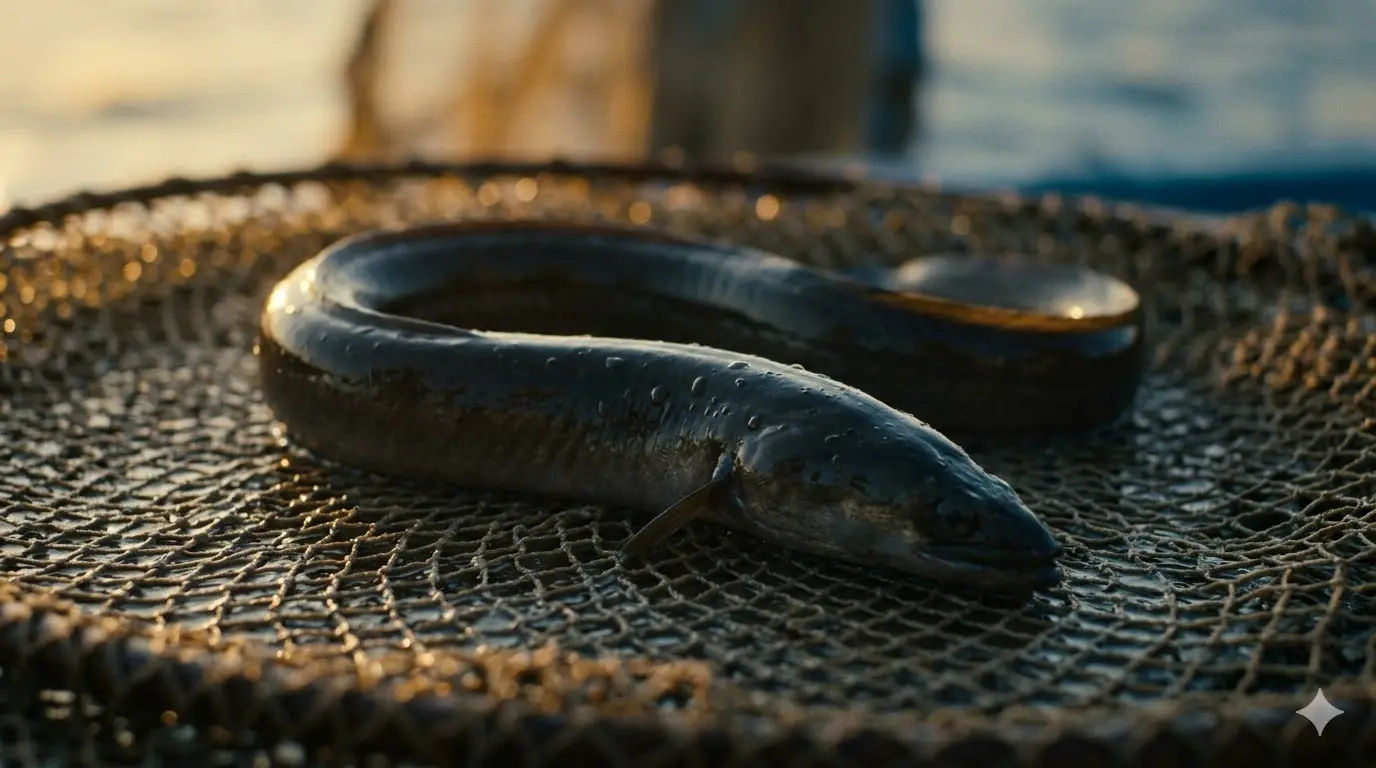
If there is one fish that tells the story of the Delta, it is the bisato, the eel.
More than a century ago people fished only at the mouths of the Po and in the lagoon, because there were no boats suitable for facing the open sea. The most prized species was the eel. To sell the catch, the fishermen rowed to the Chioggia fish market with the "batane", small rowing boats, towing behind them the "marote": baskets with the eels immersed in the water. With the stops and overnight stays, they were not home before fifteen days, if all went well.
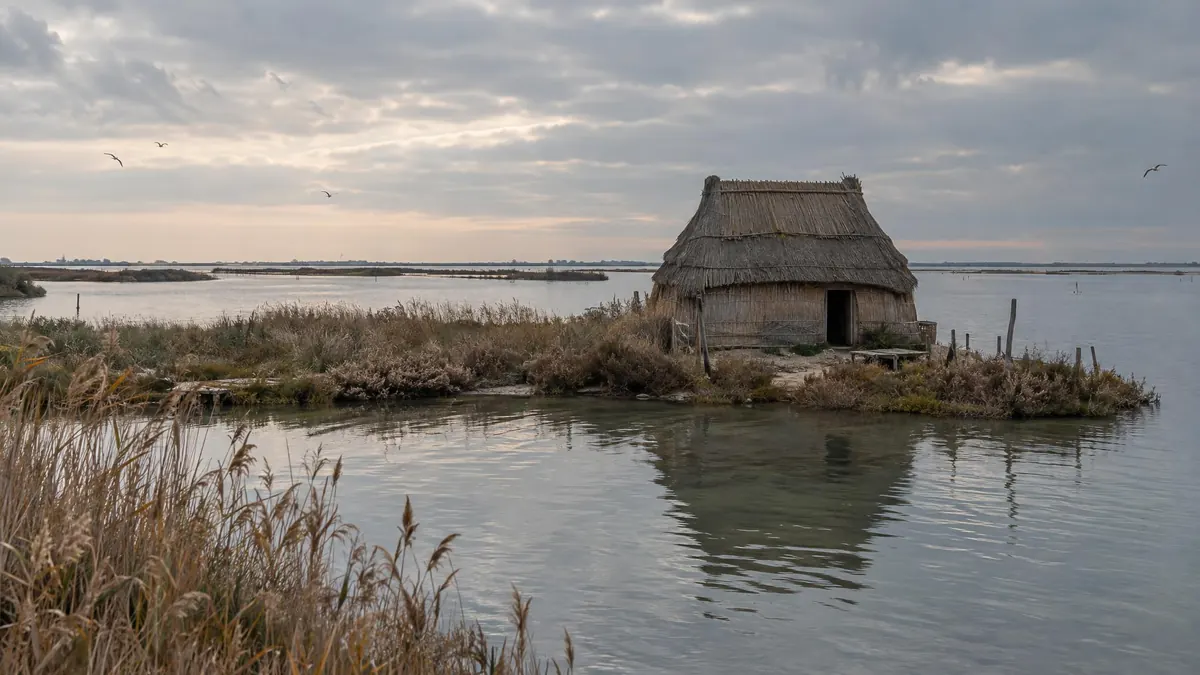
Eel fishing followed the rhythm of their return to the sea. Between September and Christmas the "ferma" period began. The fishing crews, made up of extended families of dozens of people, slept in casoni made of marsh reed, like the one that still stands today at Scano Boa. They fished with fixed nets and went home only once a week.
Bisato is still one of the dishes that stand for the Delta. The series *Dinner Club* brought its cameras right to Pila: the chef Carlo Cracco and Fabio De Luigi met the fisherman Natale Mantovan at the market, and together they went to his casotto to taste bisato in tecia. To discover all the secrets of this unique animal, you can read our article on the mysterious journey of the eel.
The great fleet and the commuters of the sea
Today the Pila fleet accounts for over a quarter of the Veneto fishing force. The boats work with different techniques: bottom trawling, volanti, hydraulic dredges, fishing in the lagoon and in the river, and mussel and clam gathering.
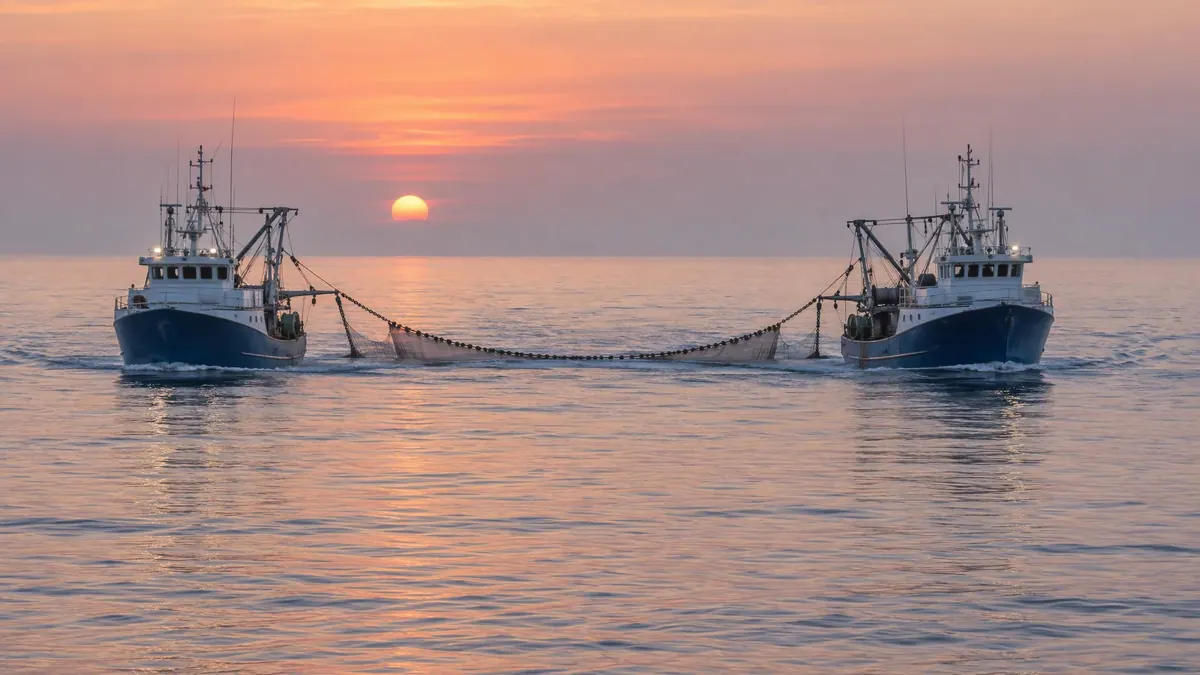
In open sea the main techniques are the volante and the strascico (bottom trawl). The volante is used for anchovies: a net held in suspension, towed by two boats in sync. One lowers the net, the other takes the cables, then they move apart, sailing side by side. The strascico, by contrast, uses a cone-shaped net towed along the bottom by a single boat, which travels at low speed holding the net open with heavy wooden boards.
Out at sea are the mussel farms, grown in long tubular nets called "calze". In the lagoon, on the other hand, the fishermen go clamming by getting into the water with the "rasca" by hand, or by fishing from the boat. Undersized catch is always thrown back into the water, in the fattening pens, to let it grow.
Working at Pila also means dealing with a difficult port. The channel bed often gets shallower, making it complicated and dangerous for loaded boats to come back in. In the worst years some fishing boats were forced to take shelter in nearby ports to unload the fish. "A commuter's life", one boat owner called it: leaving earlier in the morning, getting back later in the evening, sometimes sleeping right on the boat. It is a problem that those who live from fishing here have to face all the time.
The words of fishing: the vocabulary of the Delta
The dialect names of fish in the Delta have stayed alive above all among fishermen. Knowing these words means understanding the soul of our territory.
- Sardon and Sardela: The sardon is the anchovy, fished in particular from March to May and from July to October. The sardela is the sardine, the one in "sardee in saor".
- Papalina and Sfogio: The papalina is the sprat, fished all year round, particularly in autumn and winter. The sfogio is the sole, which, when it comes from the lagoon, writes Raixe Venete, is darker.
- Canocia and Sepa: The canocia is the mantis shrimp (canocchia), fished all year round, mostly in autumn: in high season Pila handles up to 80 crates per fishing boat. The sepa is the cuttlefish, fished all year round, particularly from April to October with static nets.
- Moéca and Masaneta: Two life stages of the green lagoon crab. The moéca is the soft-shell crab, caught at the moment of moulting. The masaneta is the female caught at the end of summer, full of eggs.
- Schia and Gò: The schia is the small grey lagoon shrimp. The gò is the goby, a lagoon fish that lives on muddy bottoms and from which risotto de gò is made, described as "very tasty" by the Veneto Region guide.
- Peocio, Caparossolo and Bevarassa: The shellfish. The peocio is the mussel, the caparossolo is the clam (vongola verace), while the bevarassa is the sea clam (the Adriatic clam), fished in particular in the winter and spring months.
- Caosteo and Barbon: The caosteo is the grey mullet, among the catches at the Pila market. The barbon is the red mullet.
Veneto also has sharp proverbs. People say "Aqua turbia, vadagno de pescaori" (Muddy water, fishermen's gain). For the seasons, the saying reminds us that "El barbon va col melon": the red mullet is eaten from summer onwards. And when difficulties seem insurmountable, in Veneto they say: "Co l'aqua toca al culo, s'impara a nuar" (When the water touches your bottom, you learn to swim). A philosophy of life that this land, used to defending itself from water, knows well.
The perfect storm: subsidence and the blue crab
The resilience of the fishermen of Pila has been tested many times. In the 1950s, while the sea threatened the embankments, the land had to deal with the sinking of the ground. Massive gas extraction sped up a natural phenomenon at striking rates: in a single year the ground dropped thirty centimetres, until the extraction was suspended.
Today, the threat comes directly from the water and has blue claws. The invasion of the blue crab has brought clam farming in the lagoons to its knees: clam production in the Sacca degli Scardovari has collapsed, and the Polesine fishermen's consortium has lost hundreds of members.
A crisis that has hit women's work hard. In the Polesine half of the fishermen are women: before the arrival of the blue crab they were three out of four. Many of them, former textile industry workers, had found in clams a job that is now in difficulty.
And yet, when the water touches your bottom you learn to swim. At the Pila market the blue crab has begun to make its way and to be sold. It is not the clam, of course, but the Delta is trying to turn an invasion into a new commercial opportunity.
The numbers of a Veneto record
Despite the environmental challenges, the volumes of the Pila fish market remain among the highest in Veneto. The Cooperativa Pescatori runs the port, combining fishing and aquaculture at sea, in the lagoon and in the river in a way that is unique, backed by the daily work of over two hundred members.
The Pila market confirms itself as the first in Veneto by quantity of fish sold, ahead even of Chioggia. The vast majority of the whole region's catch passes through these two hubs.
Blue fish is the main product of the fleet, followed by mussels, mullets and mantis shrimp. Over seventy different fish species pass through the auction crates every year.
The fishermen are looking ahead too. Recently new oyster-farming plans have started, setting aside areas of lagoon for growing oysters. An innovation that promises to put new flavours alongside the historic products of the Delta.
The rhythms of nature and the fishing closure
The sea keeps its own time. The seasons and the closure periods set the rules, and this is reflected in what arrives at the market and, as a result, on the menus of restaurants like ours.
Every year the biological closure (fermo biologico) kicks in, a mandatory halt for certain types of fishing. In the heart of summer, for several weeks, the bottom-trawling boats of our stretch of the Adriatic have to switch off their engines and stay in port.
Blue fish fishing stops too. The volanti, the ones that leave at four in the morning hunting anchovies, observe a stop of their own to let the sea rest.
This is why the fish on offer changes over the year. When bottom trawling stops, we cook what comes from the other boats and from the lagoon. These pauses are needed to protect the areas where fish grow and reproduce.
Frequently asked questions
Where is Pila and how many people live there?
Pila is a hamlet of the municipality of Porto Tolle. It is the village farthest from the town hall, built on the island of Ca' Venier, and about 350 people live there.
How do you get to the Pila lighthouse?
The Punta Maistra lighthouse stands on an islet on the left bank of the Po di Pila. It can be reached only by water with boat excursions, but it cannot be visited inside.
What is Scano Boa and how do you get there?
Scano Boa is a strip of sand just outside the mouth of the Po di Pila. Here the old reed casoni of the fishermen still stand, and they inspired a novel and a film. You can only get there by boat.
Can you visit the Pila fish market?
The fish market is a working facility, where the auctions and health checks take place. To find out whether it can be visited, you have to ask the Cooperativa Pescatori directly.
What fish is caught at Pila?
Pila is famous above all for blue fish. But the boats also bring in mantis shrimp, mullets, cuttlefish, palombo (smooth-hound), mussels and, lately, the blue crab.
What is a descending auction (asta a ribasso)?
It is the system used at Pila: you start from a high price and go down. The traders have a remote control and whoever presses the button first wins the fish at that price.
What is the difference between volante and strascico?
The volante is used mainly for anchovies: two boats tow a net hanging in mid-water. The strascico (bottom trawl), by contrast, is a cone-shaped net towed along the seabed by a single boat.
Why does the fish in restaurants change in summer?
In summer the mandatory biological closures kick in to protect fish reproduction. Bottom trawling and the volanti stop for several weeks, so the type of fish that arrives at the market changes.
From the Pila market to our table
Here at Ponte Molo, we feel the story of Pila is close to us because of a deep kinship of origins. In 1953, when our sign was born at the entrance to Porto Tolle, we were a small osteria with simple dishes for fishermen and farmers. Those were the same years in which, writes the Municipality of Porto Tolle, the fishermen's cooperative was developing at Pila.
Today, more than seventy years on, the bond with the water has stayed firm and intact. We buy the fish from the Pila market directly at the auction, from the fishermen's cooperative, without going through a wholesaler: from there it arrives in our steaming pans and on our grills. Our Tagliolini neri al granchio blu (black tagliolini with blue crab) turn a threat to the lagoons into a dish that tells the story of the Delta today.
When you order our Grigliatona del Molo, the Barca de Fritto or the Scoglio 1953, you are tasting our cooking. There is no need for complicated words to describe it: it is simply the cooking of the Po Delta, with the honest taste of tradition.
We are open every day, 365 days a year, for lunch from 12:00 to 14:30 and for dinner from 19:00 to 22:30. And for those who want to experience the area without hurry, setting out in the morning to explore the embankments or take a boat to Scano Boa, we have rooms right above the restaurant, with buffet breakfast included: local products and cakes made by us. We are your gateway to the Delta.
Sources and further reading
Pila: breve storia, Municipality of Porto Tolle
Scardovari: breve storia, Municipality of Porto Tolle
Percorso museale, sala uno: Passato prossimo, Fishing Museum "Pesca e dintorni", Scardovari
Percorso museale, sala tre: Per mare e lagune, Fishing Museum "Pesca e dintorni", Scardovari
Territorio (le isole e le frazioni), Municipality of Porto Tolle
Comunicato n. 224 dell'11 febbraio 2026: Cooperative di Pila e porto peschereccio, Veneto Region
Faro di Pila (Veneto Around Me, versione inglese), Veneto Region
Faro di Punta della Maistra, General Catalogue of Cultural Heritage (Ministry of Culture)
Faro di Punta Maistra, Water Museums of Venice
Scano Boa, ultima frontiera del Delta, Italia.it (Italian national tourist board)
Camera dei Deputati, resoconto stenografico del 23 luglio 1957, Chamber of Deputies
Pila resta primo mercato ittico (24 settembre 2025), Polesine24 / La Voce di Rovigo (data from Veneto Agricoltura)
La pesca tiene, vongole e cozze no (28 maggio 2026), Polesine24 / La Voce di Rovigo (data from Veneto Agricoltura)
Il granchio blu si è preso il delta del Po (da Le Monde), Internazionale
Continue exploring the Delta
The Po Delta bisato: nature's most mysterious journey
6,000 km to the Sargasso Sea without ever eating: the story of the world's most mysterious fish.
Read more
The Cozza di Scardovari PDO mussel: the black gold of the Po Delta
The only Italian mussel with a protected designation of origin, born where the Po meets the Adriatic.
Read more
The Po Delta oyster: a hidden treasure
The specialty born from the meeting of fresh and salt water.
Read moreShare this story
If this article made you curious, share it with anyone who wants to know where the fish they eat comes from.